Tokyo travel guide
Updated November 19, 2026


On Tokyo Bay in the Kanto region of Honshu, Tokyo is a vast capital whose districts feel like separate towns. Asakusa keeps the old downtown around Sensoji Temple, Kaminarimon Gate and the Nakamise shopping street; Ueno gathers museums, a zoo and a broad park. In the west, Shinjuku combines skyscrapers and neon-lit bar lanes, while Shibuya is a centre of youth fashion and contemporary culture. Ginza is known for luxury shops and dining, and Odaiba spreads across reclaimed land in the bay, with waterfront promenades and views of Rainbow Bridge.
Tokyo’s food carries the legacy of Edo, the city’s former name: Edomae sushi, tempura and soba grew from its street-food culture, while monjayaki is closely associated with Tsukishima and Fukagawa meshi with the old waterfront district of Fukagawa. Shrines, Buddhist temples and seasonal customs remain part of daily life alongside the city’s modern art, shopping and entertainment.
The city suits first visits built around neighbourhood walks, as well as trips focused on food, museums, shopping or nightlife. Choose a few neighbouring districts at a time: Tokyo’s scale makes a focused exploration more rewarding than trying to cover it all. Older buildings can have steps and narrow interiors, and busy streets and stations are not uniformly accessible.
Tokyo highlights
Tokyo moves between centuries in a few stations: temple lanes and historic gardens sit alongside immersive digital art, landmark views and lively food markets. Timed-entry attractions can require advance booking; the city’s parks and shrine grounds offer quieter pauses between districts.
History & heritage
Asakusa’s temple complex preserves an old-town atmosphere, while the Imperial Palace grounds recall Edo Castle and its gardens offer a calm walk in central Tokyo.

Sensō-ji
Temple architecture and religious heritage · Traditional shopping streets and snacks · An old-town stroll
Sensō-ji, Tokyo’s oldest temple, anchors Asakusa. Pass the giant lantern at Kaminarimon and follow Nakamise, an Edo-period shopping avenue, to the temple’s main hall; the surrounding streets keep the district’s traditional character close at hand.
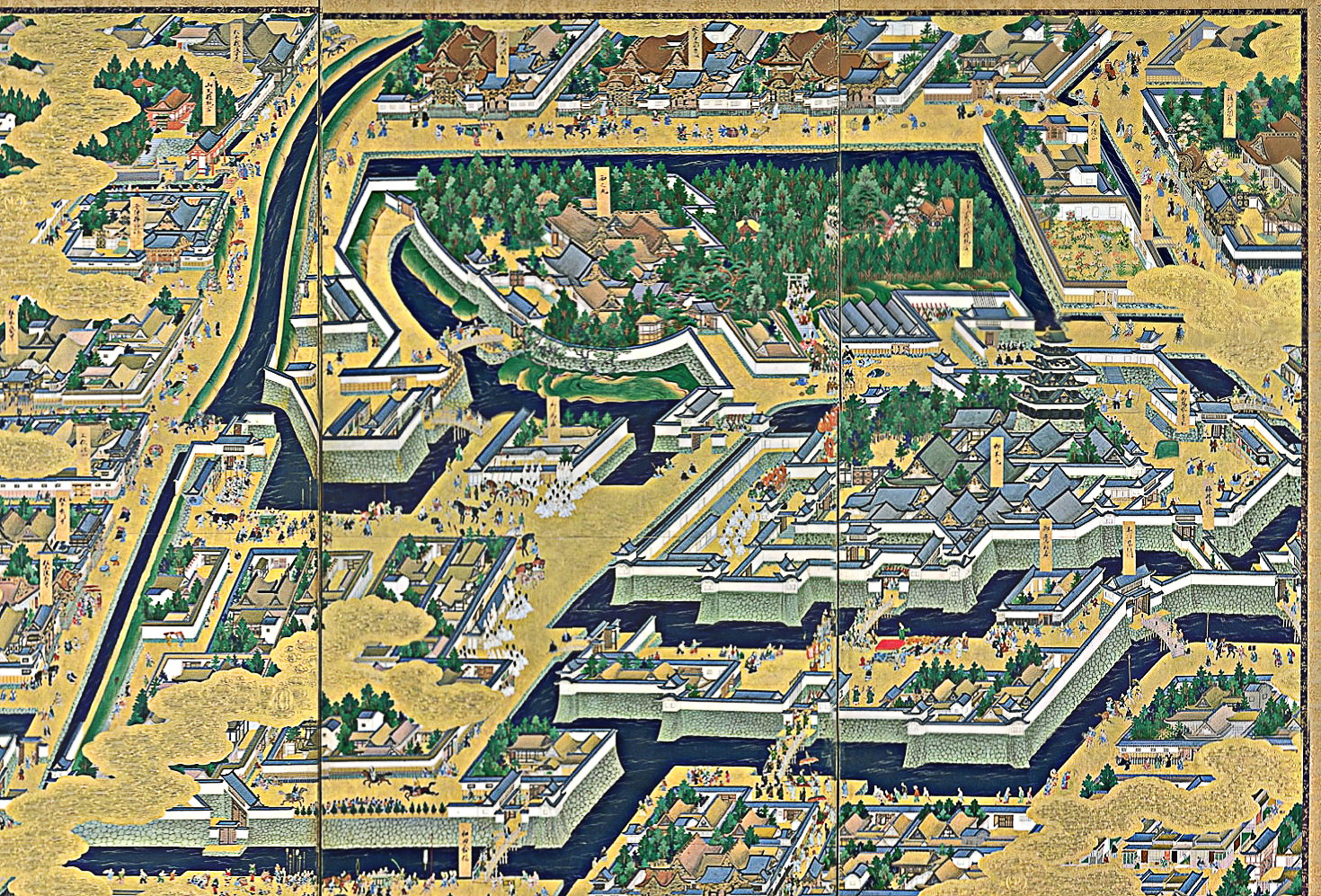
Edo Castle
Edo-period history · A central garden walk
Edo Castle once housed the Tokugawa family during the Edo period. Remnants of the former castle survive within the grounds of the Imperial Palace; the East Gardens are open to the public.
Museums & culture
Tokyo’s cultural range includes immersive digital-art spaces and a reservation-only museum devoted to animation.

teamLab Borderless
Immersive digital art · Visitors who enjoy exploratory exhibits
This Azabudai Hills digital-art museum brings more than 75 works together in rooms where images flow across boundaries, creating a continuously changing environment. Weekend and holiday slots can sell out weeks ahead; weekday mornings tend to be less crowded.
- Adult admission starts at ¥3,400 and varies by date.
- Book a timed entry; weekend and holiday slots can sell out weeks ahead.
- Re-entry is not allowed.

Ghibli Museum
Animation fans · A museum visit combined with Inokashira Park
The Ghibli Museum in Mitaka brings animation into a compact, distinctive museum experience. Entry is by timed reservation, and tickets are not sold at the museum; the overseas ticket route is linked from its official English ticket page.
- Open 10:00–18:00; last entry 16:00.
- Closed Tuesdays.
- Adult admission is ¥1,000; tickets are sold through Lawson Ticket, not at the museum.
- Tickets for the next month go on sale on the 10th of each month.
Nature & outdoors
Large gardens and wooded parkland provide green breathing space within the city, from formal landscapes to broad lawns and paths.

Shinjuku Gyoen National Garden
A substantial garden visit · Cherry blossoms or autumn colour · A quiet break from central Tokyo
Shinjuku Gyoen combines Japanese, English and French landscape styles across a 58-hectare garden. It offers a peaceful contrast to the surrounding city and is a notable spot for spring blossoms and November foliage.
- Admission is ¥500.

Ueno Park
Museums and galleries · Families visiting the zoo · Cherry blossoms
Ueno Park brings museums, galleries and Ueno Zoo together in a walkable green setting. Its rows of cherry trees draw blossom viewers, while the surrounding cultural institutions make the park a useful anchor for a full day in northern Tokyo.
- Many nearby museums and attractions close on Mondays.

Yoyogi Park
A walk or time outdoors · Combining a park visit with Harajuku and Meiji Shrine
Yoyogi Park’s broad lawns and tree-lined paths offer a spacious outdoor pause beside Harajuku and Meiji Shrine. It works well as a green interlude on a walk through western Tokyo.
Food & drink
Tsukiji’s outer-market lanes remain a destination for seafood, sushi and food shopping, even though the former inner market has moved to Toyosu.

Nightlife & entertainment
Shibuya’s famous crossing and rooftop deck make a vivid pairing of street-level city life and panoramic views.

Shibuya Crossing
A first Tokyo cityscape experience · Street photography · Exploring Shibuya
Shibuya Crossing is the busy intersection outside Shibuya Station, where waves of pedestrians cross every two minutes. See the scramble from street level or from a nearby café or station building; Shibuya’s shops and evening energy make it easy to fold into a broader district visit.

Shibuya Scramble Square
shopping · Panoramic city views · Sunset · Seeing Shibuya from above
Shibuya Scramble Square rises above the station and is home to SHIBUYA SKY, a 229-metre rooftop observation deck with 360-degree views. Its outdoor SKY STAGE is especially popular at sunset, when entry slots are in high demand.
- SHIBUYA SKY is open 10:00–22:30; last entry is 21:20.
- Web advance tickets are ¥2,700 before 15:00 and ¥3,400 from 15:00; same-day window prices are ¥3,000 and ¥3,700 respectively.
- Each date’s tickets open at 00:00 JST two weeks ahead; sunset slots sell out first.
More places to see


Sources (13)
- Where to Stay in Tokyo: Best Neighbourhoods (2026 Guide)
- Book in Advance: teamLab, Ghibli & Shibuya Sky — tokyo.how
- Best things to do in Tokyo tailored to your preferences | The Official Tokyo Travel Guide, GO TOKYO
- Top tourist attractions in Tokyo: the best sightseeing spots | The Official Tokyo Travel Guide, GO TOKYO
- Shibuya - the epicenter of modern Japanese culture | The Official Tokyo Travel Guide, GO TOKYO
- Tokyo Neighborhoods Guide: Best Districts to Visit (2026)
- How to See the Best of Tokyo in 3 Days | The Official Tokyo Travel Guide, GO TOKYO
- Japanese Tradition | Guide to Japan's Shrines and Temples | Travel Japan | JNTO
- Tokyo in 7 days: the classic neighborhoods plus day trips to Kamakura and Hakone, a one-week itinerary | TOKYO MAPPED
- Tokyo Itinerary Plan For The Best Vacation in 5 Days | The Official Tokyo Travel Guide, GO TOKYO
- Where to Stay in Tokyo 2026: Best Areas & Hotel Guide
- Where to Stay in Tokyo: Shinjuku, Asakusa or Shibuya? (2026)
- A guide to Asakusa - an area of true Japanese tradition | The Official Tokyo Travel Guide, GO TOKYO
Tokyo by area
Tokyo’s eastern districts bring temples, museums and market streets; western hubs offer late-night dining and citywide connections. Ginza’s polished shopping streets and Marunouchi’s rail-focused setting are separate central choices.
- Temple visits and traditional streets · A slower evening atmosphere · A broad choice of accommodationTaito, 7 km northeast of the centre, includes Asakusa, where Senso-ji and low-rise lanes preserve an old Tokyo atmosphere. Accommodation ranges from hostels to ryokan and business hotels; evenings are quieter than in Tokyo’s nightlife districts.

Tokyo itineraries
The one-day route links Asakusa and Ueno; two- and three-day plans add central and western Tokyo. Five days cover the main city highlights at an unhurried pace, while a week leaves room for two day trips.


One day: Asakusa and Ueno
Best for · First-time visitors on a short stay
Day 1
Asakusa and Ueno: temple streets, the Skytree and museums
Suggested start window · 08:00:00–09:00:00

Sensō-ji
120 min here
Begin at Sensō-ji, Tokyo’s oldest temple, entered through Kaminarimon; Nakamise-dori’s shops lead toward the temple with traditional snacks and souvenirs.
Travel to this stop:Train

Tokyo Skytree
150 min here
Head to the 634-metre broadcasting tower for views from its two observation decks at 350 and 450 metres; the surrounding Tokyo Skytree Town also has shops, an aquarium and a planetarium.
Travel to this stop:Train
Ueno Park
150 min here
Finish among Ueno’s museums, galleries and zoo. The park is also known for its rows of cherry trees and Ueno Toshogu Shrine.
- Meal and rest pacing
- Meal break: 60 min
- Rest break: 30 min
Rain alternative
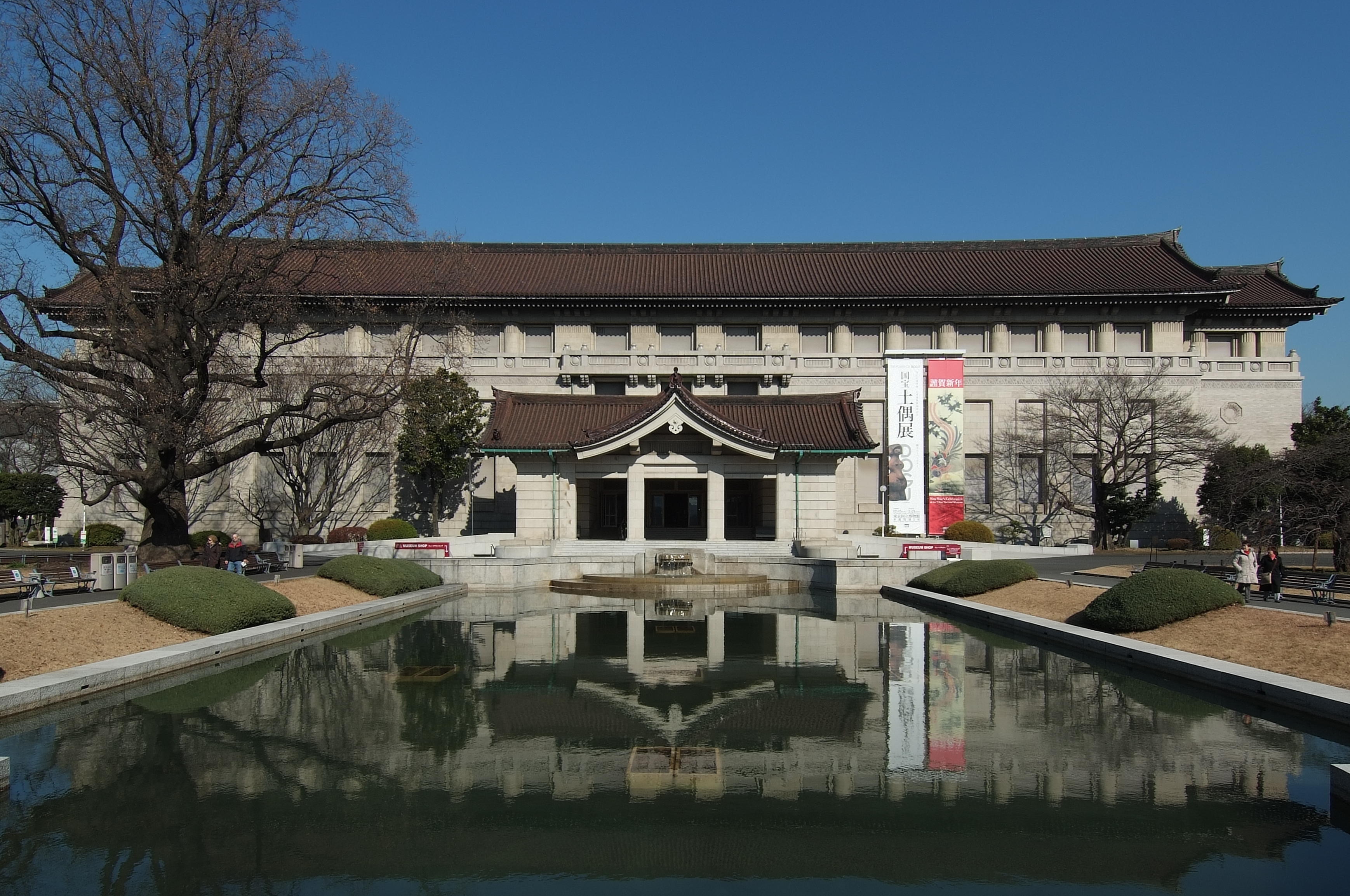
- Tokyo Nationalmuseum — In Ueno Park, the Tokyo National Museum offers an indoor focus on Japanese art and culture.
Map shows day 1: Asakusa and Ueno: temple streets, the Skytree and museums
Two days: Tokyo’s classic districts
Best for · First-time visitors with a weekend or short break
Day 1
Asakusa and Ueno: temple streets, the Skytree and museums
Suggested start window · 08:00:00–09:00:00
Sensō-ji
120 min here
Start early at Sensō-ji, Tokyo’s oldest temple, through Kaminarimon and along Nakamise-dori, the Edo-period shopping avenue.
Travel to this stop:Train
Tokyo Skytree
150 min here
Visit the 634-metre broadcasting tower, whose observation decks at 350 and 450 metres give a 360-degree view; Tokyo Skytree Town adds shops, an aquarium and planetarium.
Travel to this stop:Train
Ueno Park
180 min here
Spend the afternoon in Ueno Park, home to museums, a zoo and Ueno Toshogu Shrine, amid rows of cherry trees.
- Meal and rest pacing
- Meal break: 60 min
- Rest break: 30 min
Day 2
Harajuku and Shibuya: shrine woods, youth fashion and city views
Suggested start window · 08:00:00–09:00:00

Meiji-jingū
120 min here
Visit Meiji-jingū in the morning; woodland paths around the shrine buildings offer a quiet contrast to the surrounding city.
Travel to this stop:Walk

Yoyogi Park
90 min here
Walk through Yoyogi Park before heading into Harajuku, a centre of Japanese kawaii culture and street fashion.
Travel to this stop:Walk
Shibuya Crossing
150 min here
Cross the famous Shibuya Scramble and explore the district’s mix of youth fashion and major shopping developments.
- Meal and rest pacing
- Meal break: 60 min
- Rest break: 30 min
Rain alternative
- teamLab Borderless — Swap the park walk for teamLab Borderless, an indoor digital-art museum in Azabudai Hills.
- Tokyo Nationalmuseum — The Tokyo National Museum provides an indoor visit in Ueno.
Map shows day 1: Asakusa and Ueno: temple streets, the Skytree and museums
Three days: classic Tokyo districts
Best for · First-time visitors with three full days
Day 1
Asakusa and Ueno: temple streets, the Skytree and museums
Suggested start window · 08:00:00–09:00:00
Sensō-ji
120 min here
Begin early at Sensō-ji, Tokyo’s oldest temple, and follow Nakamise-dori’s shops from Kaminarimon toward the temple precincts.
Travel to this stop:Train
Tokyo Skytree
150 min here
The 634-metre broadcasting tower has two observation decks at 350 and 450 metres. Tokyo Skytree Town around it includes a shopping mall, aquarium and planetarium.
Travel to this stop:Train
Ueno Park
150 min here
Explore Ueno Park’s museums, zoo and shrine grounds, among its rows of cherry trees.
- Meal and rest pacing
- Meal break: 60 min
- Rest break: 30 min
Day 2
Tsukiji, Ginza and the Imperial Palace: food, shops and gardens
Suggested start window · 09:00:00–10:00:00

Tsukiji fish market
120 min here
Browse Tsukiji’s outer market, where food stalls, dried-goods shops and seafood restaurants continue the area’s market tradition.
Travel to this stop:Walk
Edo Castle
120 min here
Walk the former grounds of Edo Castle, where remnants of the Tokugawa-era stronghold remain within the Imperial Palace grounds.
Travel to this stop:Walk

GINZA SIX
150 min here
Ginza is Tokyo’s high-end shopping district, with department stores, luxury brands, jewellers and fine-dining restaurants.
- Meal and rest pacing
- Meal break: 60 min
- Rest break: 30 min
- Planning notes
- The East Gardens are closed on Mondays and Fridays; switch this day with Day 3 if needed.
Day 3
Meiji-jingū, Harajuku and Shibuya: shrine, street culture and crossing
Suggested start window · 08:00:00–09:00:00
Meiji-jingū
120 min here
Visit Meiji-jingū early; its wooded setting around the shrine buildings brings a quiet pause in the city.
Travel to this stop:Walk
Yoyogi Park
120 min here
Walk Yoyogi Park, then explore Harajuku’s street fashion and pop culture around Takeshita Street.
Travel to this stop:Walk
Shibuya Crossing
150 min here
Finish in Shibuya at the Scramble Crossing, amid the district’s large-scale shopping and youth-fashion scene.
- Meal and rest pacing
- Meal break: 60 min
- Rest break: 30 min
Rain alternative
- teamLab Borderless — Replace the park walk with teamLab Borderless, an indoor digital-art museum in Azabudai Hills.
- Tokyo Nationalmuseum — The Tokyo National Museum offers an indoor alternative in Ueno.
Map shows day 1: Asakusa and Ueno: temple streets, the Skytree and museums
Five days: Tokyo highlights at an unhurried pace
Best for · Visitors who want the main highlights without rushing
RecommendedFive days let visitors see Tokyo’s main highlights without rushing.
Day 1
Asakusa and Ueno: temple streets, the Skytree and museums
Suggested start window · 08:00:00–09:00:00
Sensō-ji
120 min here
Start at Sensō-ji, Tokyo’s oldest temple, and follow Nakamise-dori from Kaminarimon to the temple precincts.
Travel to this stop:Train
Tokyo Skytree
150 min here
The 634-metre tower’s observation decks sit at 350 and 450 metres; Tokyo Skytree Town also contains shops, an aquarium and planetarium.
Travel to this stop:Train
Ueno Park
150 min here
Ueno Park combines museums, a zoo and Ueno Toshogu Shrine with broad paths and cherry-tree rows.
- Meal and rest pacing
- Meal break: 60 min
- Rest break: 30 min
Day 2
Tsukiji and Ginza: market food and high-end shopping
Suggested start window · 09:00:00–10:00:00
Tsukiji fish market
150 min here
Explore Tsukiji Outer Market’s food stalls, dried-goods shops and seafood restaurants; the inner market has moved to Toyosu.
Travel to this stop:Walk
GINZA SIX
180 min here
Ginza’s department stores, luxury brands and jewellers make this the city’s main high-end shopping district.
- Meal and rest pacing
- Meal break: 60 min
- Rest break: 30 min
Day 3
Meiji-jingū, Harajuku and Shibuya: woodland and street culture
Suggested start window · 08:00:00–09:00:00
Meiji-jingū
120 min here
Meiji-jingū’s wooded grounds and shrine buildings offer a calm start before the nearby fashion districts.
Travel to this stop:Walk
Yoyogi Park
150 min here
Walk Yoyogi Park and continue to Harajuku, a centre of kawaii culture, street fashion and snacks.
Travel to this stop:Walk
Shibuya Crossing
150 min here
See the Shibuya Scramble Crossing and browse a district where youth fashion meets major new shopping developments.
- Meal and rest pacing
- Meal break: 60 min
- Rest break: 30 min
Day 4
Shinjuku: garden paths and lantern-lit lanes
Suggested start window · 09:00:00–10:00:00

Shinjuku Gyoen National Garden
150 min here
Shinjuku Gyoen is a green retreat in the city, worth a visit in any season.
Travel to this stop:Walk

Omoide-yokochō
120 min here
Omoide-yokochō’s narrow lanes of small bars and eateries make an atmospheric evening stop.
- Meal and rest pacing
- Meal break: 60 min
- Rest break: 30 min
Day 5
Ueno and its museums: art, history and collections
Suggested start window · 09:00:00–10:00:00
Ueno Park
240 min here
Return to Ueno Park for its museums, galleries, zoo and shrine; choose a museum-led day to explore the park’s cultural collections.
Travel to this stop:Walk
Tokyo Nationalmuseum
150 min here
The Tokyo National Museum, within Ueno Park, is one of the city’s major centres for Japanese art and culture.
- Meal and rest pacing
- Meal break: 60 min
- Rest break: 30 min
- Planning notes
- Many Ueno museums close on Mondays; check the days off for the museums you plan to visit.
Rain alternative
- teamLab Borderless — Swap the park walk for teamLab Borderless, an indoor digital-art museum in Azabudai Hills.
- Tokyo Nationalmuseum — The Tokyo National Museum is an indoor alternative within Ueno Park.
Map shows day 1: Asakusa and Ueno: temple streets, the Skytree and museums
Sources (4)
- Best things to do in Tokyo tailored to your preferences | The Official Tokyo Travel Guide, GO TOKYO
- How to See the Best of Tokyo in 3 Days | The Official Tokyo Travel Guide, GO TOKYO
- Tokyo in 7 days: the classic neighborhoods plus day trips to Kamakura and Hakone, a one-week itinerary | TOKYO MAPPED
- Tokyo Itinerary Plan For The Best Vacation in 5 Days | The Official Tokyo Travel Guide, GO TOKYO
Tokyo food: dishes and places to try
Tokyo’s food ranges from Edo-era specialties to everyday noodle dishes. Seek out Tsukishima for monjayaki; in Asakusa, look for traditional sweets such as ningyo-yaki. Sushi, tempura and soba are enduring choices across the city, while Fukagawa-meshi connects a bowl of clam rice with the old fishing district.
What to eat
Chanko-nabe
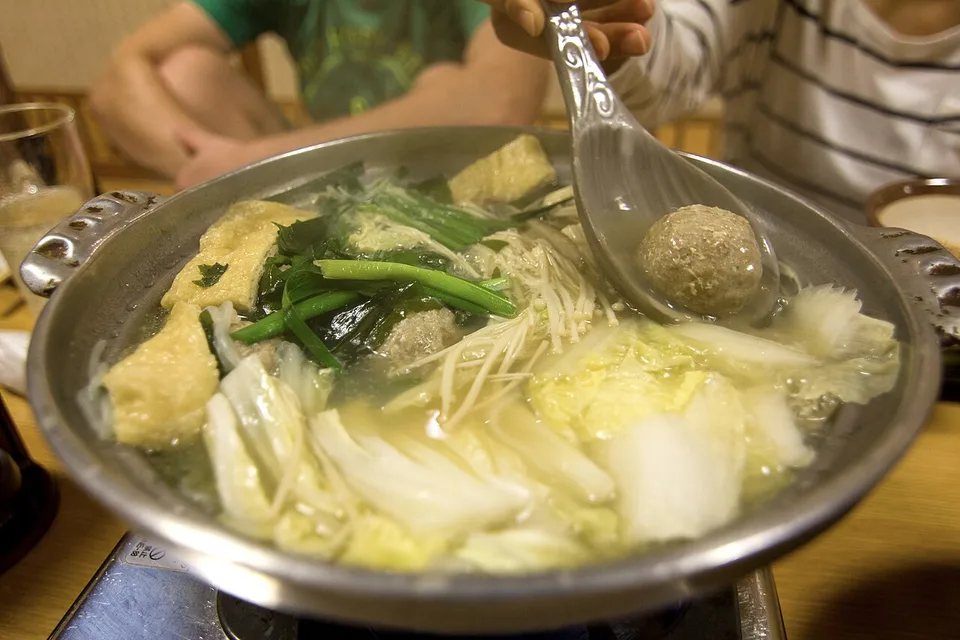
Chanko-nabe is a hearty hot pot of meat, seafood and seasonal vegetables, associated with sumo wrestlers and cooked to the recipe of each stable. Specialty restaurants around Tokyo serve it as a substantial shared meal.
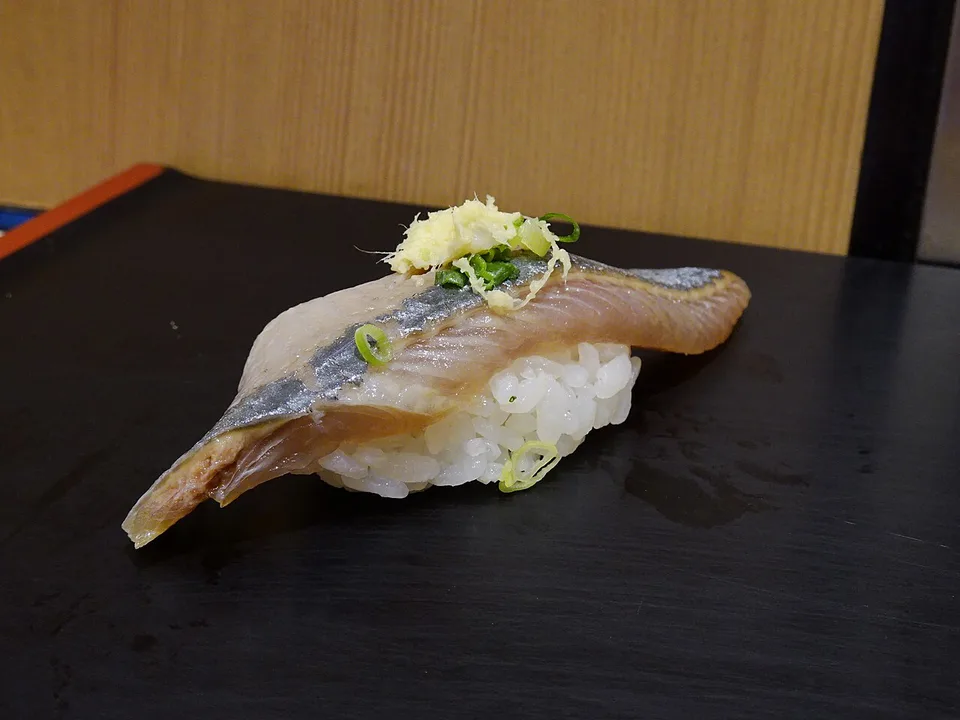
Edomae sushi
Edomae sushi grew from Edo’s seafood culture. Its fish may be aged and prepared rather than served immediately raw; try nigiri, with fish laid over vinegared rice, or chirashi, a bowl of rice topped with seafood.
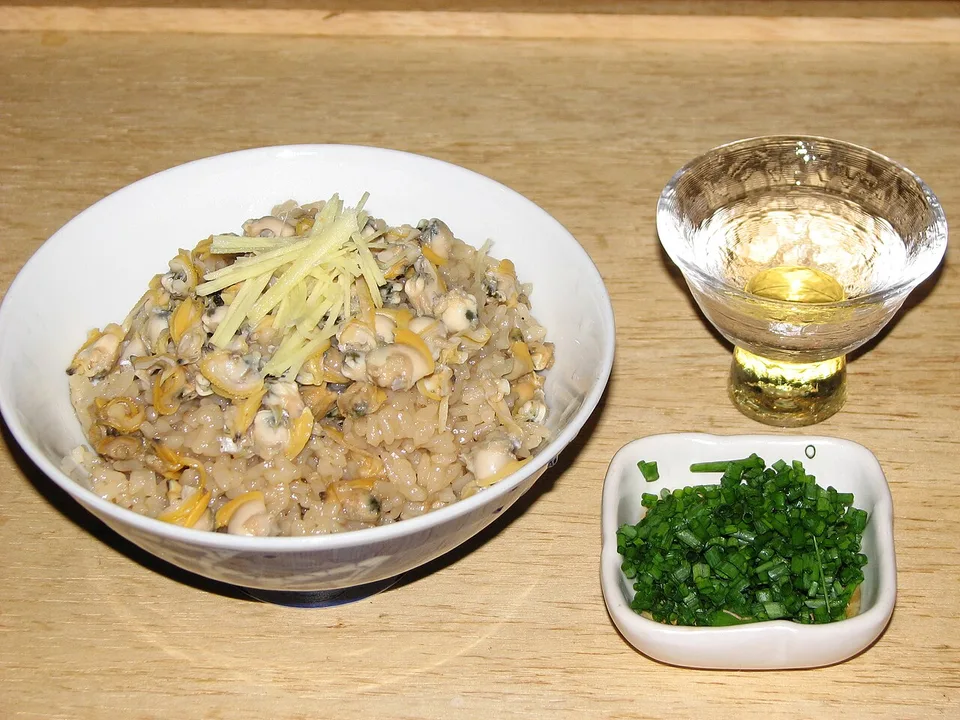
Fukagawa-meshi
Fukagawa-meshi is rice topped with a miso-based broth of littleneck clams, tofu and chopped leeks; it is also made with clams cooked into the rice. The dish began as quick food for fishermen in Fukagawa.
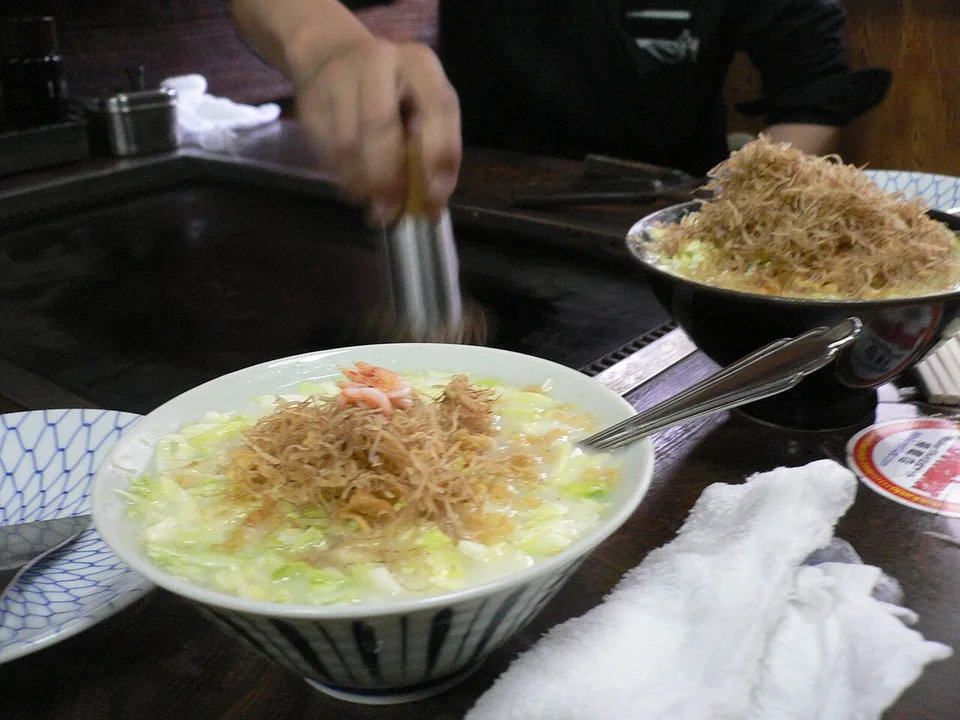
Monjayaki
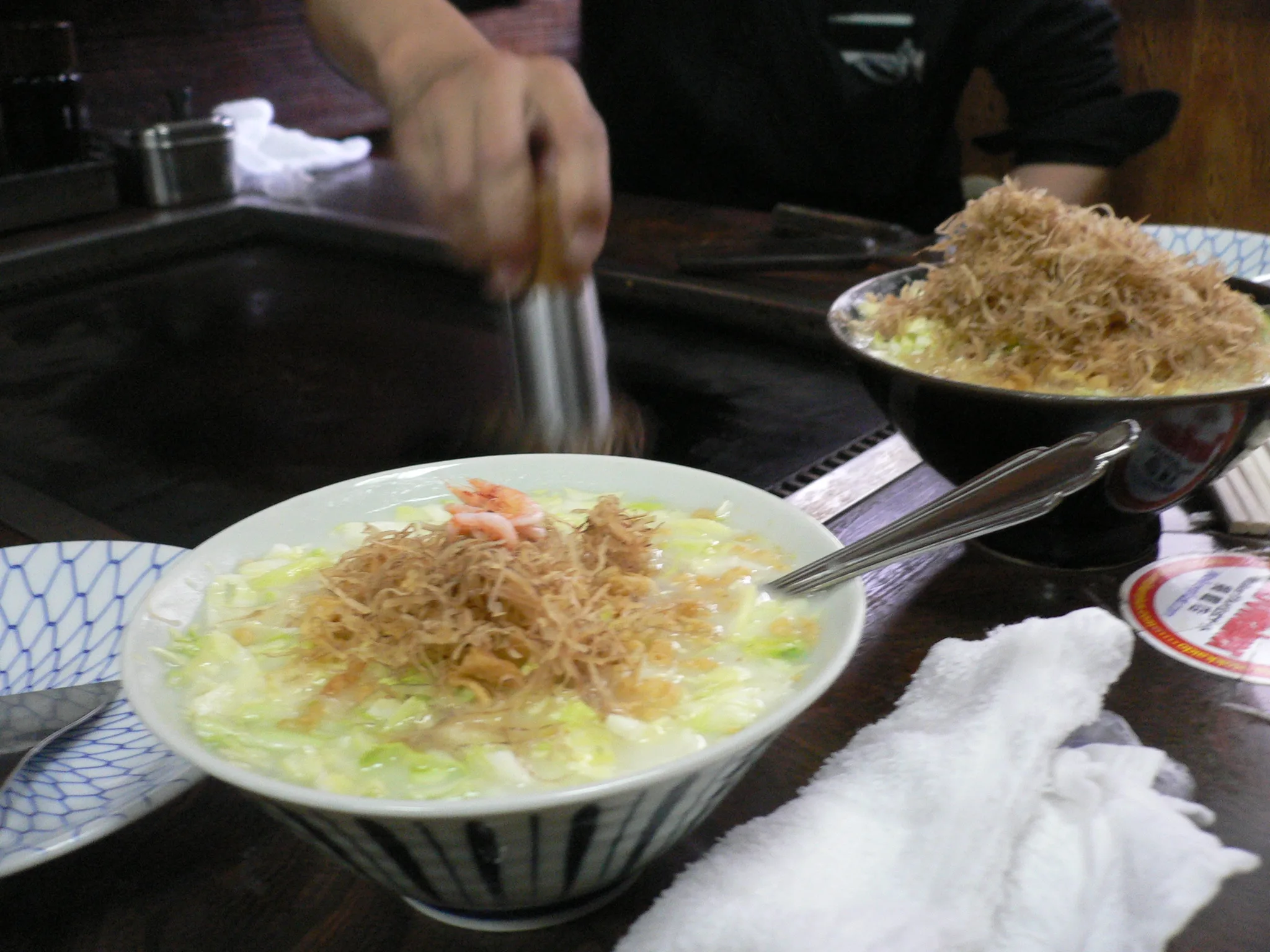
Monjayaki is a loose, savory batter mixed with cabbage and other ingredients, cooked on a hotplate and eaten with a small metal spatula. Tsukishima’s Monja Street is lined with specialist restaurants.
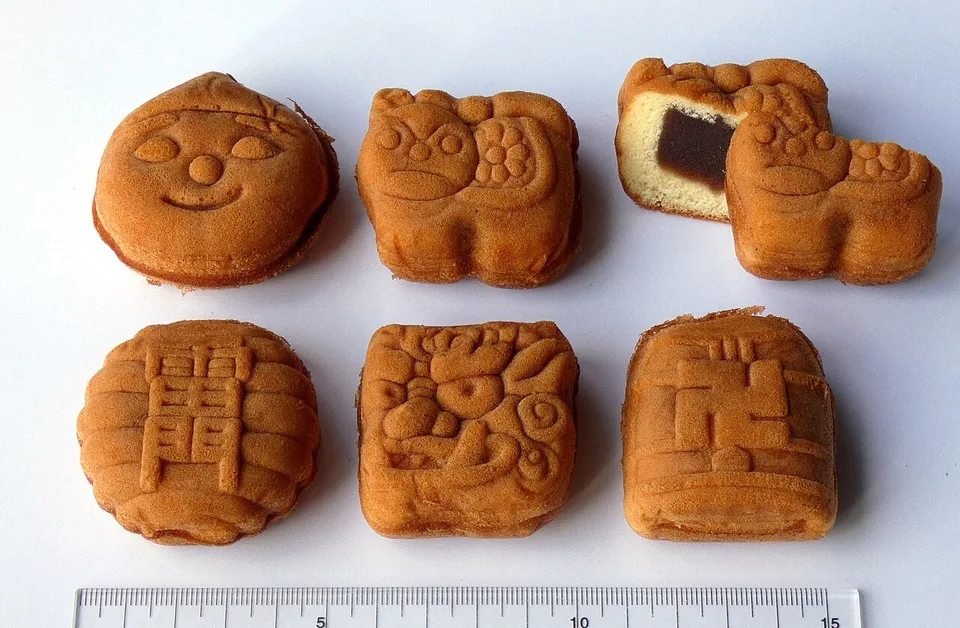
Ningyo-yaki
Ningyo-yaki are small sponge cakes shaped like dolls or figures and filled with sweet red bean paste. They are a familiar Asakusa souvenir and an easy sweet to eat while exploring the area.
Shima-zushi
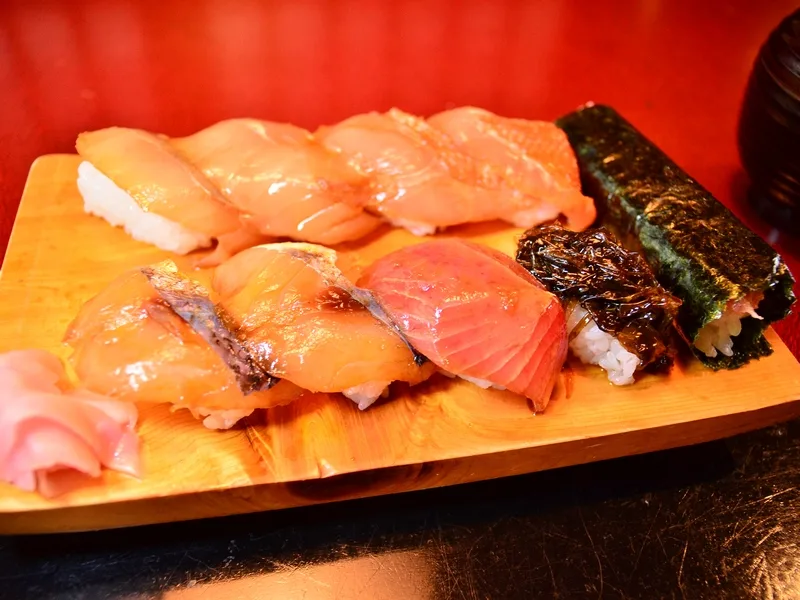
Shima-zushi uses fish caught around Tokyo’s islands, marinated in soy sauce, with rice seasoned more strongly and sweetly than typical sushi rice. Japanese mustard or chili may stand in for wasabi.
Soba
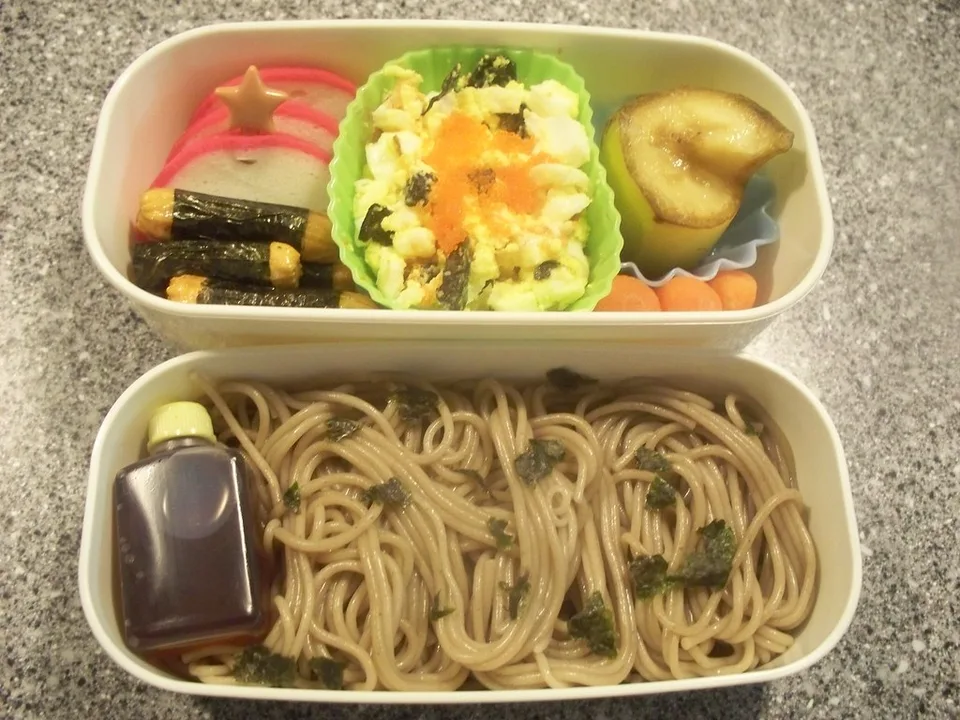
Soba are buckwheat noodles, a long-established Tokyo specialty and once a popular fast food. Slurp them to appreciate their aroma.
Tempura
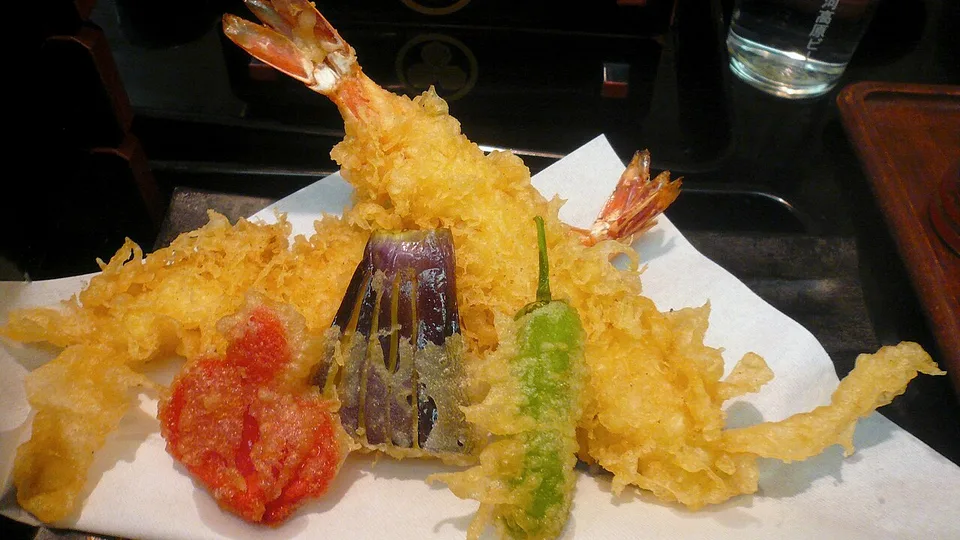
Tempura is seafood or vegetables in a light batter, fried crisp. In Tokyo it spans casual street-food roots and refined cooking; Tempura Kondo and Tempura Fukamachi specialize in it.
Where to try it

Tempura Kondo
venue · lunch · dinner
Tempura Kondo specializes in tempura, the crisp-fried seafood and vegetables central to Tokyo’s Edo food tradition.

Tempura Fukamachi
venue · lunch · dinner
Tempura Fukamachi specializes in tempura, making it a direct choice for Tokyo’s classic battered seafood and vegetables.

Ishiusuhiki Teuchi Kyorakutei
venue · lunch · dinner
Ishiusuhiki Teuchi Kyorakutei specializes in soba, Tokyo’s buckwheat noodles traditionally eaten with a satisfying slurp.

Takumi Tatsuhiro
venue · lunch · dinner
Takumi Tatsuhiro serves sushi, a Tokyo essential shaped by Edo’s seafood and vinegared-rice traditions.

Edomae Sushi Hanabusa
venue · lunch · dinner
Edomae Sushi Hanabusa specializes in Edomae sushi, the Tokyo style rooted in the city’s historic seafood culture.

Kanda Matsuya
venue · lunch · dinner
Kanda Matsuya specializes in soba, a classic Tokyo noodle dish made from buckwheat.

Tempura Meshi Kaneko Hannosuke Nihonbashi ten
venue · lunch · dinner
Tempura Meshi Kaneko Hannosuke Nihonbashi ten is a tempura specialist in Nihonbashi, serving the Tokyo tradition of crisp-fried seafood and vegetables.
Sources (6)
- Tokyo | Our Regional Cuisines : MAFF
- Tokyo Local Food | The Official Tokyo Travel Guide, GO TOKYO
- Tokyo’s Local Flavours | Discover 3 Must-Try Dishes | JNTO
- Tokyo Itinerary Plan For The Best Vacation in 5 Days | The Official Tokyo Travel Guide, GO TOKYO
- Tokyo Food Guide – Food in Japan
- Tokyo food guide: choices, costs and practical steps | JGO!
Tokyo’s traditions are woven into its streets, shrines, temples and seasonal celebrations.
In Tokyo, centuries-old religious customs sit alongside distinctive urban foodways and neighborhood cultures. Visitors encounter them most vividly at temple and shrine precincts, in Asakusa’s traditional streets, and through festivals and seasonal displays.
Asakusa’s temple traditions
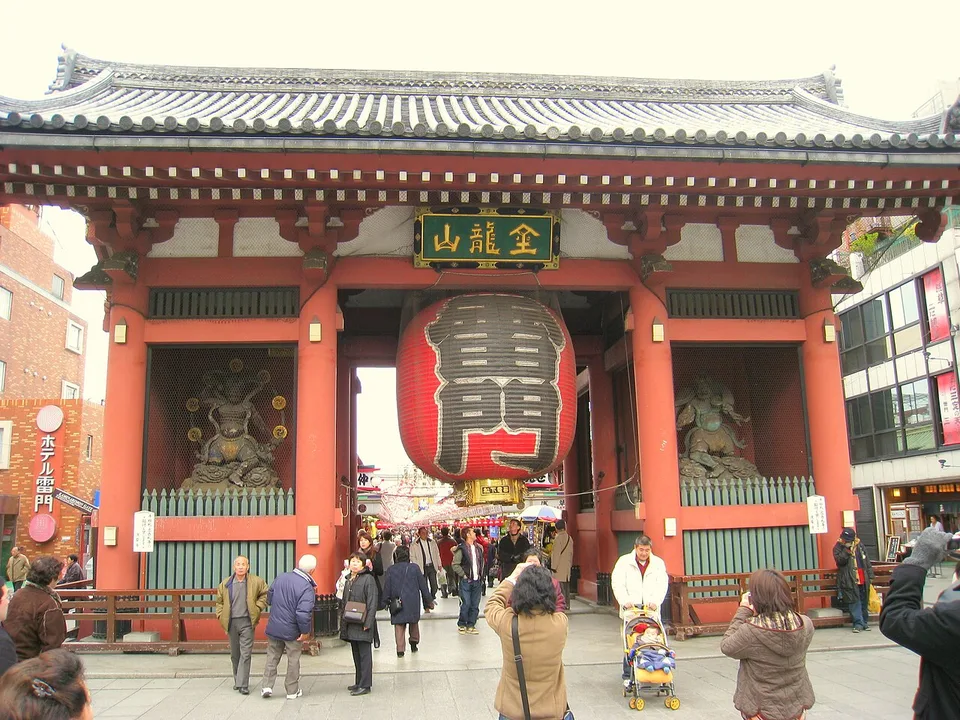
Sensoji, Tokyo’s oldest temple, anchors Asakusa’s historic streets. Pass beneath Kaminarimon’s giant red lantern and follow Nakamise, an Edo-period shopping avenue, toward the temple precinct; its stalls sell traditional snacks and souvenirs. The temple and its busy approach remain part of everyday Asakusa as well as a major destination for visitors.
Shrines and temples
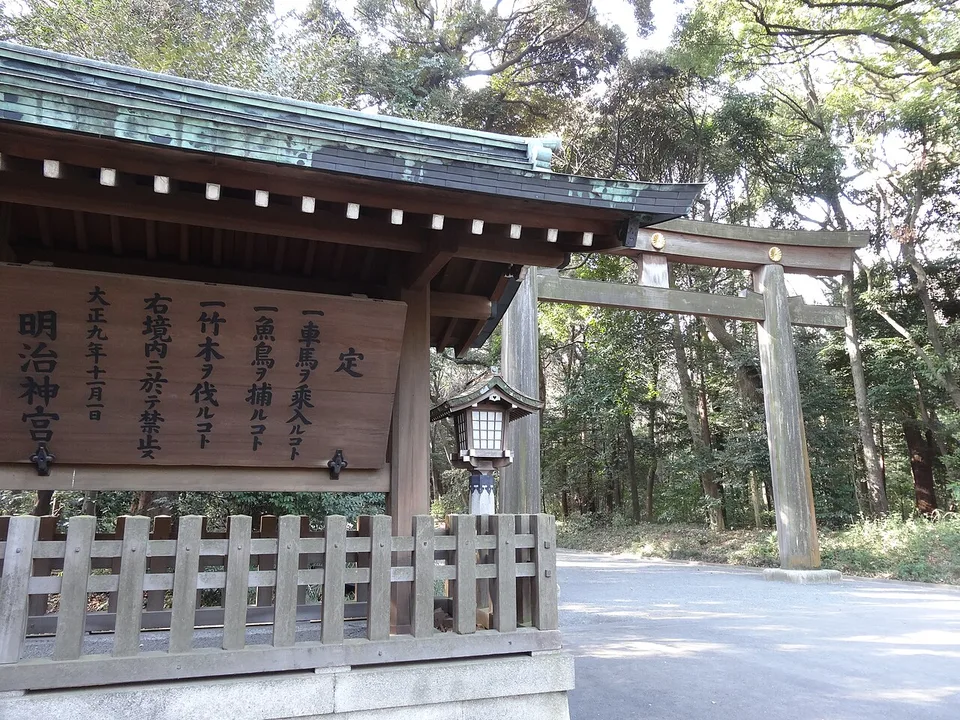
Tokyo’s Shinto shrines and Buddhist temples are distinct religious places. A torii marks the entrance to a shrine, while a temple commonly has a sanmon gate. Meiji Jingu stands in a forest near Harajuku, commemorating Emperor Meiji and Empress Shoken; Hamarikyu Gardens, once used by feudal lords for pursuits including falconry and rice cultivation, offers a glimpse of Edo-period life.
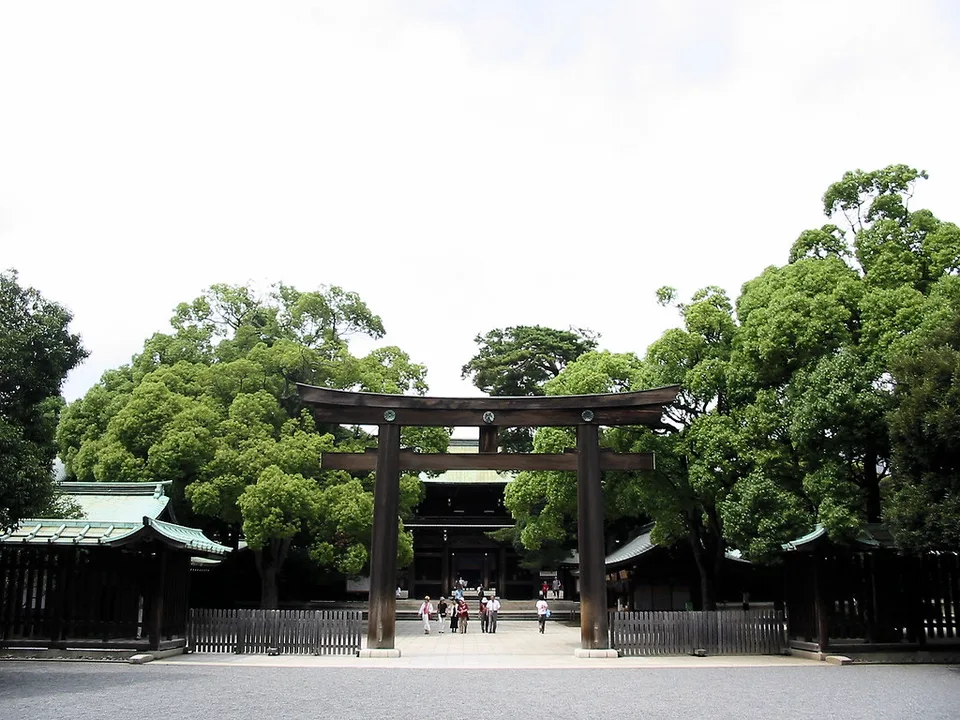
Entering a Shinto shrine
A torii marks the boundary between sacred ground and the secular world. Bow once before passing through, and use the path to one side rather than walking directly through the gate’s centre. At a temizuya water pavilion, visitors traditionally use a ladle to purify their hands and mouth before approaching the deity.
Festivals and the changing seasons
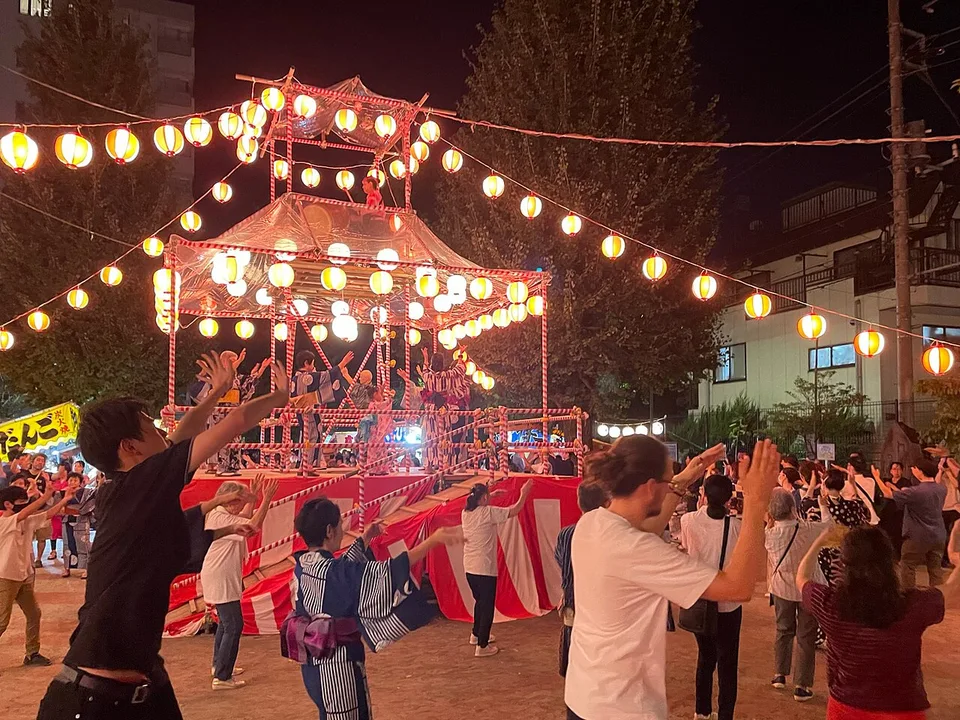
Tokyo’s cultural calendar follows the seasons: plum blossoms and Setsubun traditions arrive in February, cherry blossoms draw hanami gatherings in spring, and summer brings fireworks and Obon dances. Autumn foliage and November’s yellow ginkgo avenues give way to December illuminations. These recurring seasonal sights are part of the city’s public life, from parks and shrine precincts to streets and riversides.
Food with roots in Edo
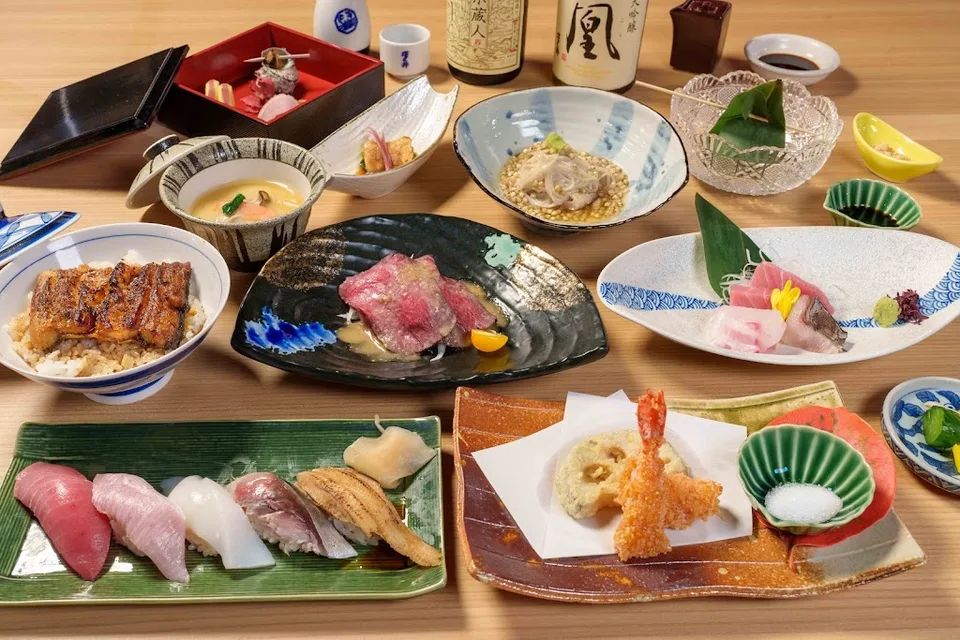
Tokyo’s food traditions carry traces of its history as Edo. Nigiri sushi developed there as quick food for city streets; Fukagawa-meshi began as a fishermen’s meal of clams and rice. Monjayaki grew from griddled snack pancakes, while tsukudani—small fish, clams or seaweed cooked with soy sauce, mirin and sugar—has long served as a savory, well-preserved accompaniment to rice.
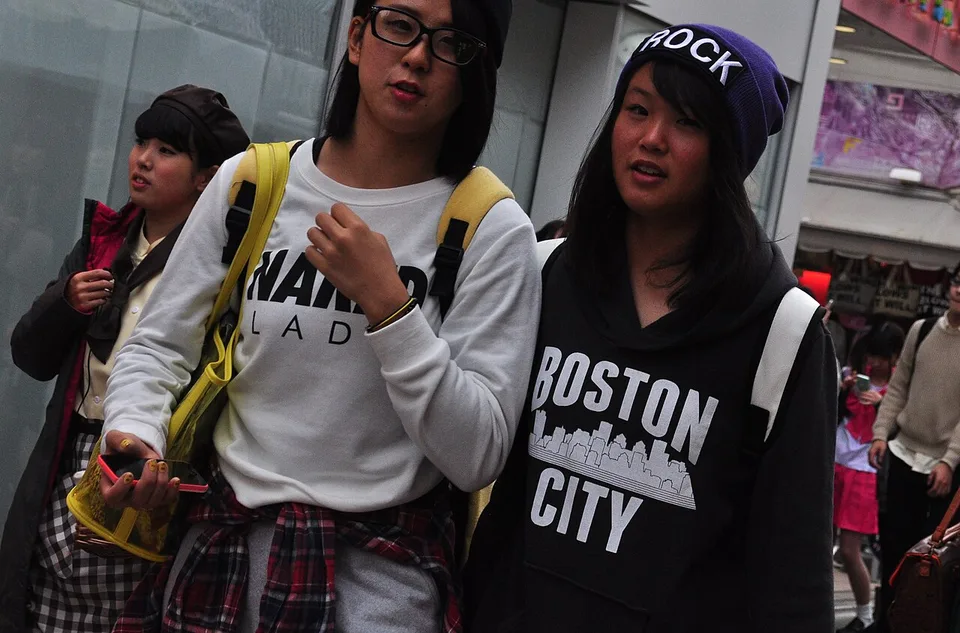
Tokyo’s living popular culture
Tokyo’s cultural life ranges from historic collections to contemporary street fashion and pop subcultures. Akihabara is known for electronics, anime, manga and video games; Harajuku’s Takeshita Street is a focus for kawaii fashion and street food. Museums in Ueno Park and the Edo-Tokyo Open Air Architectural Museum offer other ways to encounter the city’s art and architectural history.
Sources (6)
- Top tourist attractions in Tokyo: the best sightseeing spots | The Official Tokyo Travel Guide, GO TOKYO
- Tokyo Local Food | The Official Tokyo Travel Guide, GO TOKYO
- Japanese Tradition | Guide to Japan's Shrines and Temples | Travel Japan | JNTO
- Tokyo Itinerary Plan For The Best Vacation in 5 Days | The Official Tokyo Travel Guide, GO TOKYO
- CALENDAR | The Official Tokyo Travel Guide, GO TOKYO
- A guide to Asakusa - an area of true Japanese tradition | The Official Tokyo Travel Guide, GO TOKYO
Getting to and around Tokyo
Tokyo is served by Haneda Airport (HND), 16 km from the city, and Narita International Airport (NRT), 62 km away in neighbouring Chiba. Shinkansen and long-distance buses connect Tokyo with other parts of Japan; trains and subway lines are the quickest way to move around the city.
Main airports
- HND
Haneda Airport, Tokyo
100 nonstop53 international
- NRT
Narita International Airport, Tokyo
120 nonstop98 international
Shinkansen and intercity trains
Best for
Reaching Tokyo from other Japanese cities · Shinkansen journeys and onward trips from Tokyo Station or Shinagawa
Long-distance express buses
Best for
Lower-cost journeys to Tokyo and across Japan · Overnight journeys
- The main arrival and departure points are Shinjuku Expressway Bus Terminal and Bus Terminal Tokyo Yaesu.
Local and suburban trains
Best for
Crossing the city and reaching its neighbourhoods · Frequent travel on major urban routes
- Major-city trains run every few minutes.
Subway and buses
Best for
Getting around central Tokyo · Reaching destinations served by Tokyo Metro and Toei Subway lines
On trains serving the Keikyu and Toei Subway lines, contactless credit cards can be tapped at the gates without advance registration or a ticket.
Ferries and waterbuses
Best for
Cruise calls at Tokyo International Cruise Terminal · Waterway sightseeing
- Taxis, trains and buses connect Tokyo International Cruise Terminal with the city.
Taxis
Best for
Airport journeys to the city · Direct journeys with luggage
From Haneda, flat fares are ¥7,600 to Chiyoda ward, ¥9,000 to Shinjuku and ¥8,500 to Shibuya. From Narita, fixed fares are ¥29,000–31,000 to Chuo, Chiyoda and Taito wards and ¥31,500–32,500 to Shinjuku, Shibuya and most of Minato, plus tolls.
- The listed Haneda flat fares are daytime fares; they are higher from 22:00 to 05:00.
- Chuo (Ginza), Minato (Roppongi) and Shinagawa wards have no Haneda flat fare; the meter applies.
Transit cards and passes
Best for
Paying easily across Tokyo trains and buses · Visitors making repeated journeys on eligible services
Suica and PASMO are prepaid, rechargeable cards; visitor versions are valid for 28 days and can also be used at some shops and cafés. Cards are sold at ticket machines or counters at most train stations. Tokyo Free Kippu, Toei One-Day Pass and Tokyo Metro 24-Hour Ticket each cover one day, with different services included.
- Some transit cards work only in particular regions or on particular forms of transport.
- A passport may be required for some visitor transit services.
Airport transfer
From Haneda, Keikyu trains reach Shinagawa in about 11 minutes for ¥330; trains to Shibuya take about 45 minutes. Limousine buses take 55 minutes to Shibuya. From Narita, the Skyliner reaches Ueno in about 41 minutes for ¥2,580, while the TYO-NRT bus to the Tokyo Station area costs ¥1,500. Direct Narita Express trains serve Shinjuku and Shibuya; Limousine buses to those districts cost ¥3,600.
Haneda to Shibuya: about 45 minutes by train or 55 minutes by Limousine Bus. Narita to Ueno: about 41 minutes by Skyliner; to Shibuya: about 1 hour 40 minutes by train or 1 hour 55 minutes by Limousine Bus.

Sources (4)
- Top tourist attractions in Tokyo: the best sightseeing spots | The Official Tokyo Travel Guide, GO TOKYO
- Getting to Tokyo - Travel to Tokyo | The Official Tokyo Travel Guide, GO TOKYO
- How to travel by train and bus in Japan | Guide | Travel Japan (Japan National Tourism Organization)
- Where to Stay in Tokyo (2026): Neighbourhoods Compared
Tokyo through the seasons
Tokyo’s year brings spring blossoms, a rainy early summer, humid heat, autumn foliage and a cold, dry winter. Seasonal timing shifts from year to year; spring and autumn are generally the most comfortable seasons for outdoor exploring.

Mild Spring
March through May is mild and well suited to outdoor exploring, though higher-elevation sights such as Mount Fuji can close from late autumn to early spring. Plum blossoms appear around February in many parts of Japan; Tokyo’s cherry blossoms are at their best in April, followed by azaleas and wisteria. Changeable weather makes layers and waterproof clothing useful.
Hot, Humid Summer
June through August is hot and humid. The rainy season generally lasts from early June to mid-July; after it, heat and humidity climb, and August is Tokyo’s hottest month. Beer gardens, traditional festivals and fireworks recur through summer, while occasional typhoons can disrupt outdoor plans.
Cool, Fresh Autumn
September through November cools into fresh autumn weather, with foliage becoming a Tokyo highlight in November. September can still bring typhoons, making park and mountain outings less dependable; popular foliage spots can be crowded, especially on three-day weekends.
Cold, Dry Winter
December through February is cold and dry, with snow rare in Tokyo. Winter illuminations brighten December evenings, while hatsumode—the New Year custom of visiting temples and shrines to pray for good fortune—draws visitors over the first days of January.
Historical climate
Compare typical monthly heat and rainfall at a glance. These long-term patterns are useful for planning, but they are not a forecast.
View monthly climate data
| Month | Temperature | Rainfall | Humidity | Wind | Wet-day frequency |
|---|---|---|---|---|---|
| January | 4.8 °CTypical range: 3.6–5.9 | 76.7 mm/monthTypical range: 19.3–138.9 | 75.2 %Typical range: 71.7–78.1 | 4.2 m/sTypical range: 3.9–4.6 | 21.8 % of daysTypical range: 9.7–32.6 |
| February | 5.4 °CTypical range: 4.4–6.6 | 73.8 mm/monthTypical range: 34.9–135.1 | 74.5 %Typical range: 70.3–78.6 | 4.5 m/sTypical range: 4.1–4.9 | 27.4 % of daysTypical range: 17.8–35.9 |
| March | 8.7 °CTypical range: 7.7–10 | 127.1 mm/monthTypical range: 77.1–183.4 | 75.4 %Typical range: 72.1–78.7 | 4.5 m/sTypical range: 4–4.9 | 37.5 % of daysTypical range: 25.8–45.5 |
| April | 13.6 °CTypical range: 12.4–14.7 | 133.9 mm/monthTypical range: 68.8–215.5 | 76.8 %Typical range: 73.4–79.9 | 4.5 m/sTypical range: 4–4.9 | 39.9 % of daysTypical range: 26.7–53.7 |
| May | 18.2 °CTypical range: 16.9–19 | 146 mm/monthTypical range: 84–202.5 | 78.7 %Typical range: 75.7–81.1 | 4.1 m/sTypical range: 3.7–4.4 | 41.7 % of daysTypical range: 25.8–58.4 |
| June | 21.7 °CTypical range: 20.5–22.4 | 182.7 mm/monthTypical range: 106.5–244.6 | 82.3 %Typical range: 80.5–84.4 | 3.6 m/sTypical range: 3.2–4 | 54.9 % of daysTypical range: 46.3–67 |
| July | 25.4 °CTypical range: 24.2–26.8 | 158.7 mm/monthTypical range: 49.4–264.4 | 83.2 %Typical range: 80.2–85.9 | 3.8 m/sTypical range: 3.2–4.4 | 48.2 % of daysTypical range: 28.7–64.5 |
| August | 26.7 °CTypical range: 25.4–27.9 | 123.9 mm/monthTypical range: 34.4–227.4 | 81.3 %Typical range: 77.5–84 | 3.6 m/sTypical range: 3–4.1 | 43.9 % of daysTypical range: 25.2–58.7 |
| September | 23.5 °CTypical range: 22.3–24.6 | 214.4 mm/monthTypical range: 112.2–339.8 | 81.9 %Typical range: 78.4–85.1 | 3.9 m/sTypical range: 3.4–4.3 | 50.9 % of daysTypical range: 26.3–76.7 |
| October | 18 °CTypical range: 17–19.1 | 219.5 mm/monthTypical range: 75.6–446.3 | 81.8 %Typical range: 80–84.9 | 3.9 m/sTypical range: 3.5–4.3 | 43.1 % of daysTypical range: 31.6–58.1 |
| November | 12.6 °CTypical range: 11.5–13.7 | 109.1 mm/monthTypical range: 38–163.7 | 79.9 %Typical range: 78.2–82.9 | 3.8 m/sTypical range: 3.4–4.1 | 32.7 % of daysTypical range: 13–43.7 |
| December | 7.3 °CTypical range: 6.1–8.3 | 69 mm/monthTypical range: 22.6–121.6 | 77.2 %Typical range: 74.2–80.9 | 4 m/sTypical range: 3.7–4.3 | 22.9 % of daysTypical range: 9.4–35.5 |
Baseline: 1991–2020 · Source: NASA POWER historical climate profile
Good to know in Tokyo
Tokyo’s busy stations, shrine and temple customs, and reservation-only attractions are easier to navigate when you know what to expect. English signage is common on major transport, but smaller shops may use Japanese only.
Tokyo trains can be very busy, particularly when commuters board; keep behind the yellow line and queue in the marked platform zones.
Tokyo prices: rooms, meals and getting around
Tokyo prices vary with the length of your stay and the choices you make. Accommodation, food and shopping can take very different shares of the total. Airport transfers, local journeys, long-distance rail and attraction tickets add separate costs; your route and purchases shape your own total.
Typical costs
- Classic tonkotsu ramen
- ¥1,180per person
- Tokyo Metro paper-ticket ride
- ¥180 – ¥330per trip
- Tokyo Subway Ticket, 24 hours
- ¥1,000per person
- Tokyo Subway Ticket, 72 hours
- ¥2,000per person
- Narita Express to Tokyo
- ¥3,140per trip
- 7-day Japan Rail Pass
- ¥50,000per person
- Tokyo Tower admission
- ¥1,500per person
- Asakusa hostel bed
- ¥2,500 – ¥4,000per night
- Asakusa budget hotel
- ¥6,000 – ¥12,000per room per night
- Asakusa mid-range ryokan
- ¥15,000 – ¥30,000per person per night
- Shinjuku business hotel
- ¥8,000 – ¥15,000per room per night
- Shibuya boutique hotel
- ¥20,000 – ¥50,000per room per night
Ways to save
- For frequent journeys on Tokyo Metro and Toei Subway, compare the 24-hour or 72-hour Tokyo Subway Ticket with individual fares.
- For a Tokyo–Narita journey, the N’EX TOKYO Round Trip Ticket is valid for 14 days.
- Mix convenience-store meals, noodle shops, set-meal restaurants and department-store food halls with pricier meals; check posted prices before choosing a restaurant.
- At an izakaya, ask whether an otoshi or seating charge applies before ordering.
- Compare accommodation by the full stay total, including guest count, meals and checkout taxes, rather than by the headline nightly rate.
- Set your own shopping allowance if you plan to buy few souvenirs.
- When booking a special dinner, replace one meal allowance with the course price instead of adding it on top of the full food allowance.
Where to stay in Tokyo
Tokyo’s hotels range from design-led stays in Ginza and Akihabara to high-rise retreats in Shinjuku and palace-side luxury in Marunouchi and Otemachi. The value picks bring distinctive neighbourhood character; mid-range choices pair central locations with individual style; premium hotels offer landmark settings and polished, high-end interiors.
01
Premium

Mandarin Oriental, Tokyo
Luxury in Nihonbashi · High-floor city views
Mandarin Oriental, Tokyo rises above Nihonbashi’s banking district, with rooms and public spaces high over the city. Its elevated position and restrained interiors suit travellers looking for a polished luxury stay in central Tokyo.
- Why it stands out
- A high-rise setting above Nihonbashi · Restrained, elegant interiors
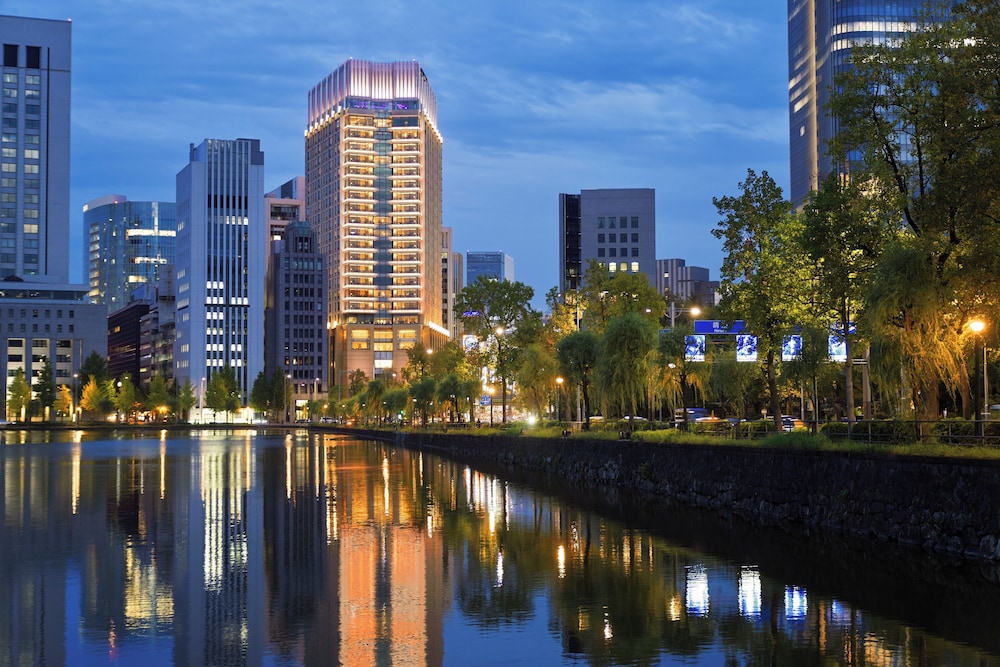
The Peninsula Tokyo in Tokyo
A Marunouchi base near the Imperial Gardens · A purpose-built luxury hotel
The Peninsula Tokyo stands beside the Imperial Gardens in Marunouchi, with daytime garden views and a notably dark city outlook at night. Its ground-floor lobby and purpose-built design set it apart from Tokyo hotels housed high in mixed-use towers.
- Why it stands out
- An address beside the Imperial Gardens · A ground-floor lobby · Close to Ginza
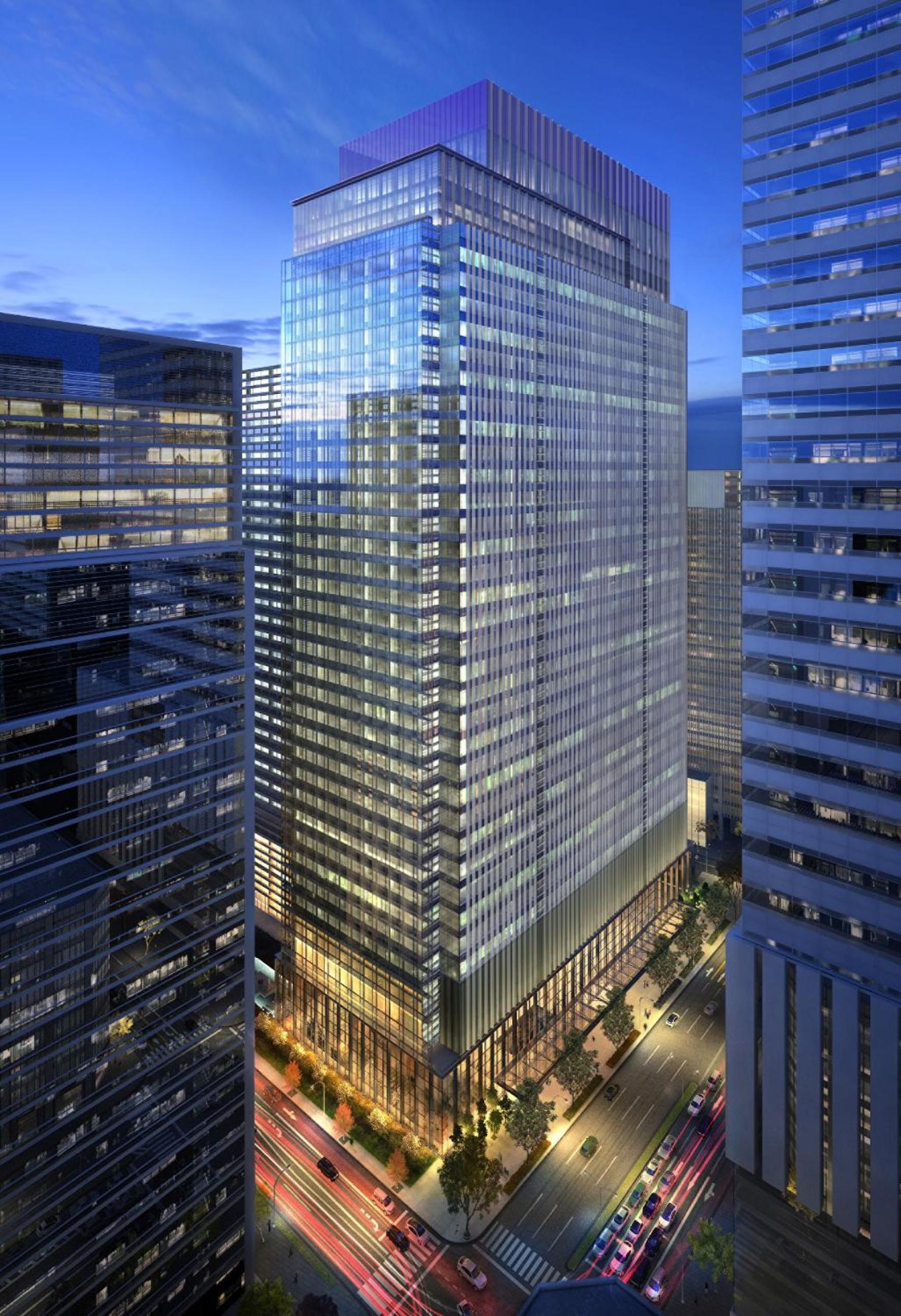
Four Seasons Hotel Tokyo at Otemachi in Tokyo
Imperial Palace East Gardens views · A luxury stay with spa facilities
Four Seasons Hotel Tokyo at Otemachi occupies a high-rise financial district overlooking the Imperial Palace’s East Gardens. A direct palace outlook, lavish comforts and an elaborate spa make it a choice for travellers seeking a contemporary luxury retreat.
- Why it stands out
- A high-rise setting overlooking the East Gardens · A direct palace view · An elaborate spa
02
Mid-range
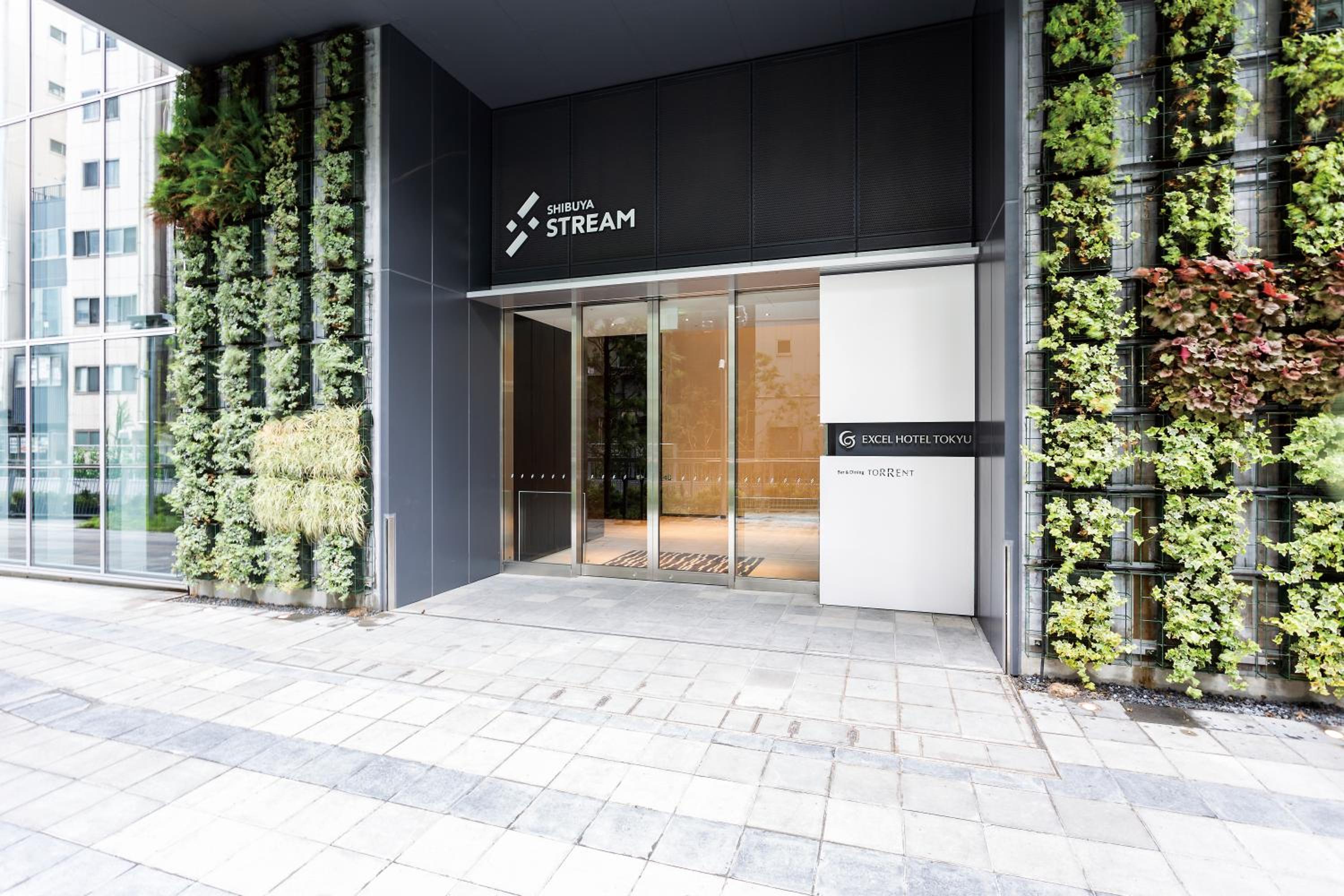
Shibuya Stream Hotel in Tokyo
Staying in Shibuya · Contemporary architecture and design
Shibuya Stream Hotel occupies a modern development in Shibuya, a lively base for exploring the district’s shops and restaurants. Its contemporary architecture offers a design-forward alternative to more traditional city hotels.
- Why it stands out
- A location in Shibuya · A modern, design-led setting
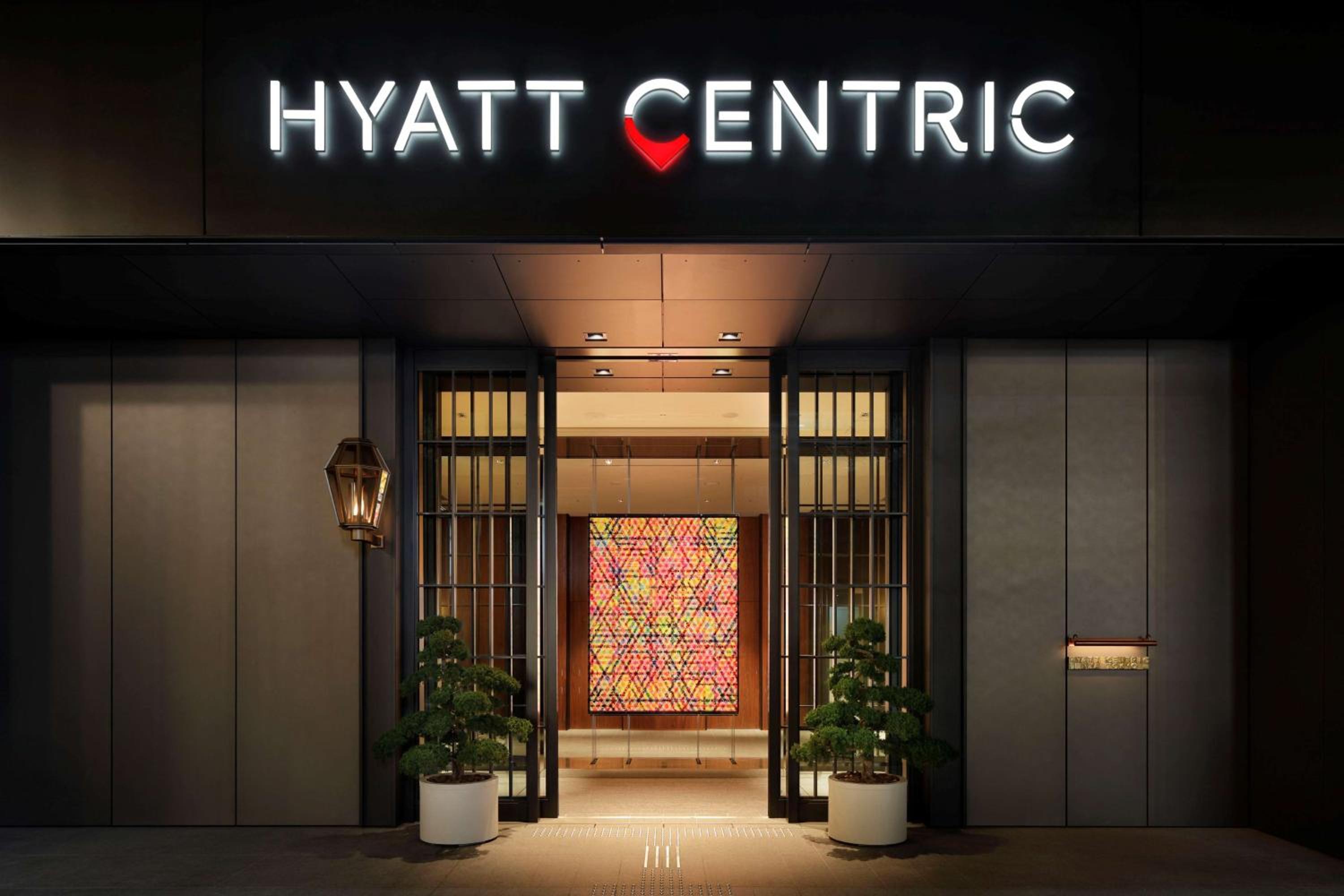
Hyatt Centric Ginza Tokyo in Tokyo
Ginza shopping and dining · A central commercial-district base
Hyatt Centric Ginza Tokyo places guests in Tokyo’s best-known commercial district, among flagship retailers, department stores and restaurants. Its Ginza address suits travellers who want a central base for shopping and dining.
- Why it stands out
- A location in Ginza · Close to major retail and dining
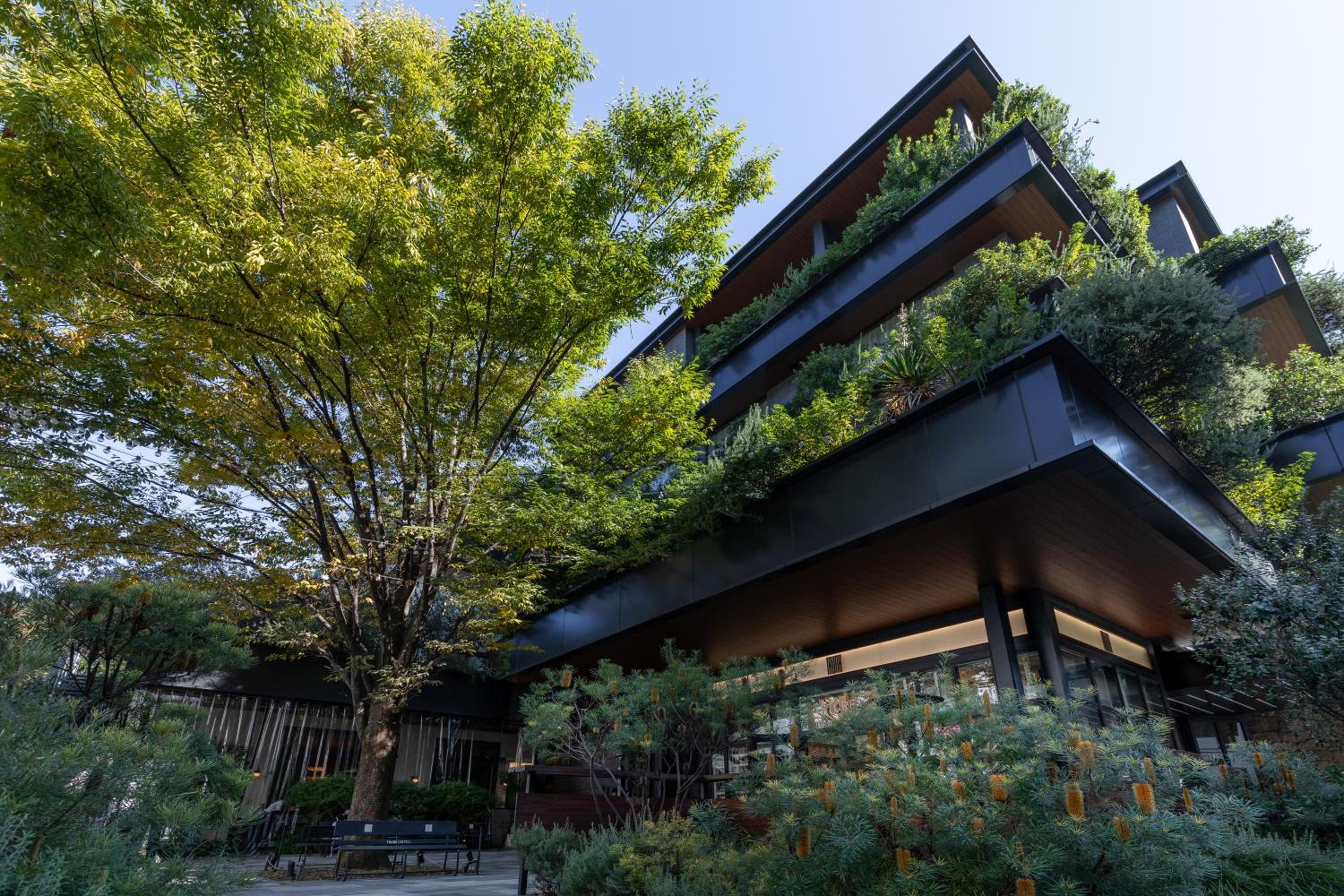
TRUNK (HOTEL) CAT STREET in Tokyo
Exploring Shibuya and Harajuku · A boutique hotel with social spaces
TRUNK (HOTEL) CAT STREET is a boutique stay in Jingumae, between Shibuya and the fashion and design streets around Harajuku. Its bar and two dining options give guests places to gather without leaving the hotel.
- Why it stands out
- A location in Jingumae · An on-site bar and two dining options
03
Great value
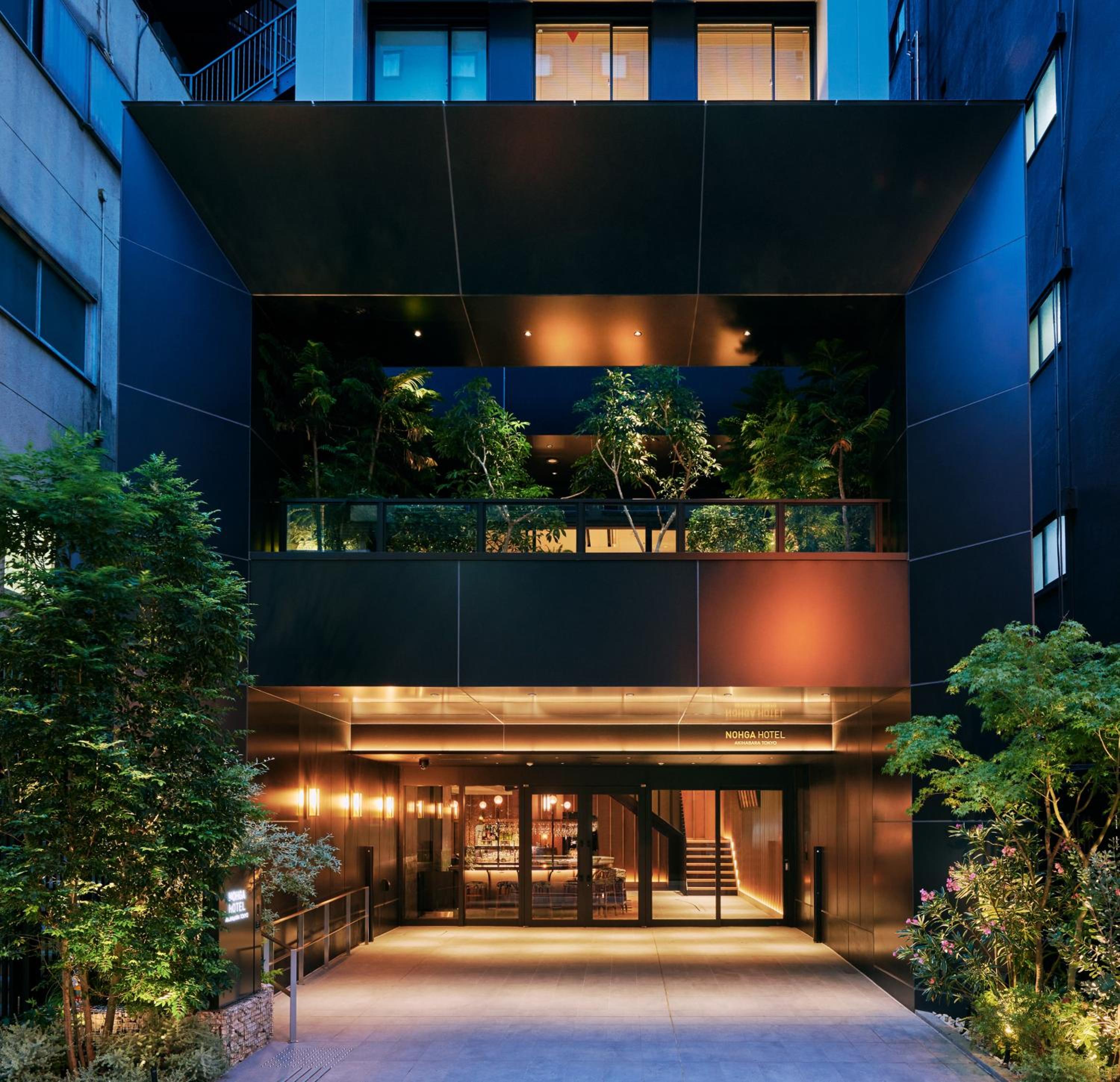
Nohga Hotel Akihabara Tokyo in Tokyo
Akihabara’s youth culture and electronics district · A calm, design-conscious base
Nohga Hotel Akihabara Tokyo sits in Sotokanda, amid Akihabara’s youth culture and electronics scene. Its restrained rooms provide a quieter counterpoint to the colourful streets, with sound systems and streaming music for guests who want to unwind indoors.
- Why it stands out
- A location in Akihabara · A deliberately subdued look · In-room sound systems and streaming music
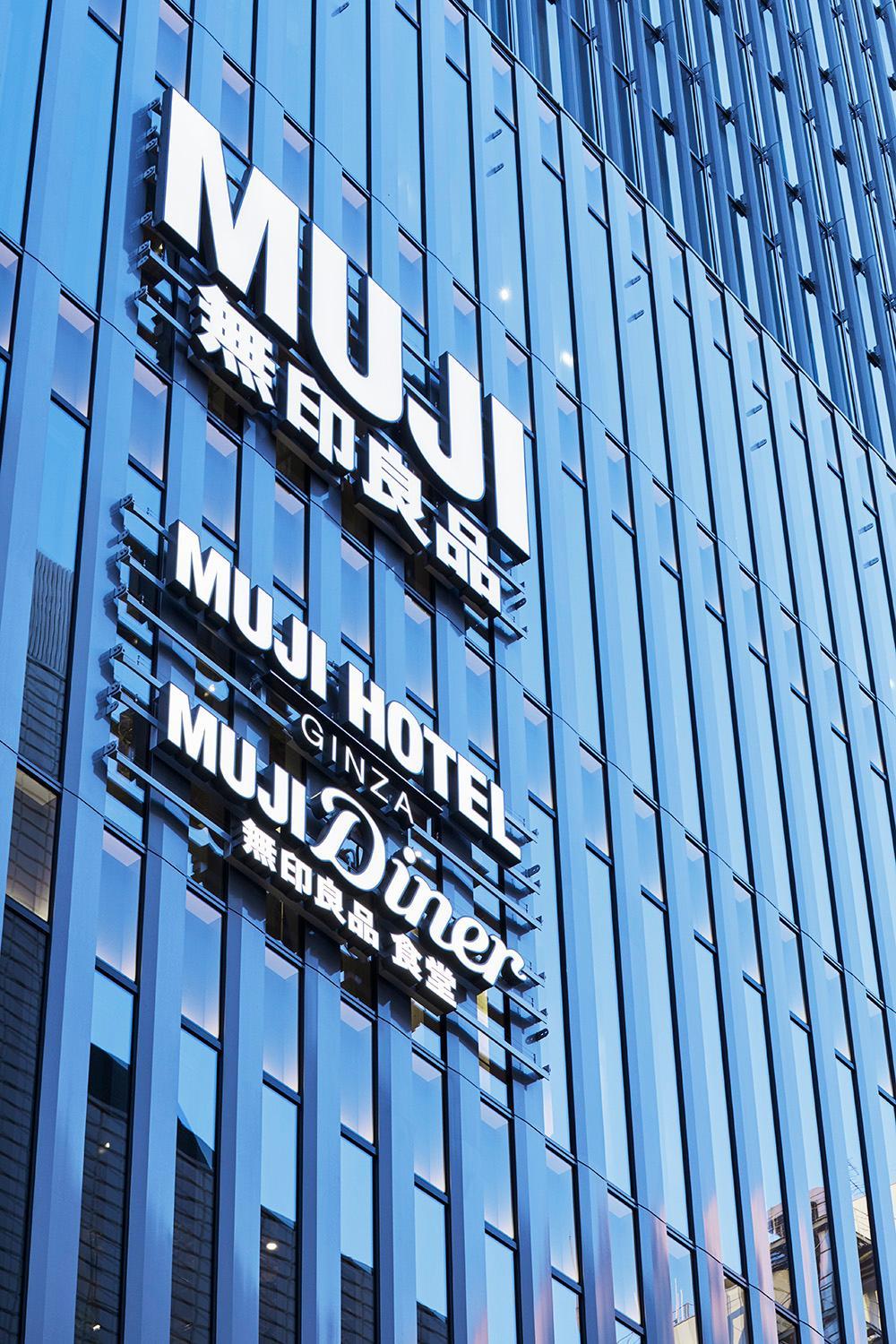
Muji Hotel Ginza in Tokyo
Ginza shopping · Minimalist design · Travellers comfortable with compact rooms
Muji Hotel Ginza brings the Japanese retailer’s pared-back aesthetic to the heart of Ginza, above its flagship store. Rooms start small, making it a good fit for travellers who value a central commercial-district address and streamlined design over extra space.
- Why it stands out
- An address above Muji’s Ginza flagship · A consistent, simple design
- Worth knowing
- Rooms start on the small side
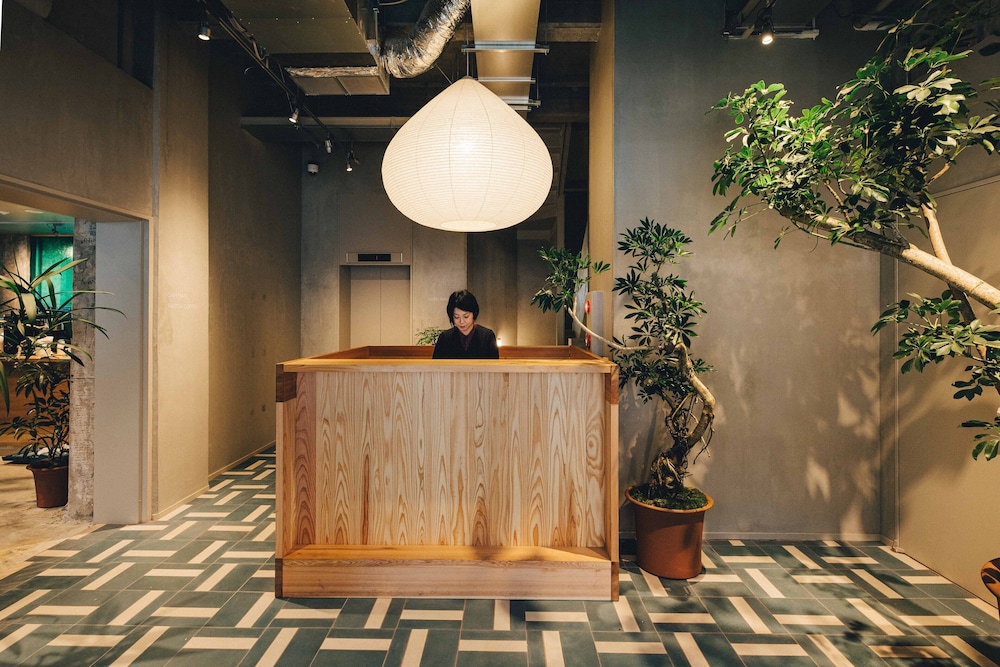
K5 in Tokyo
Architecture and design · A boutique stay in Nihonbashi
K5 transforms a 1920s bank building in Nihonbashi Kabutochō, Tokyo’s financial district, into a boutique hotel with contemporary Swedish design. Its character and historic setting make it a distinctive choice for guests drawn to architecture and considered interiors.
- Why it stands out
- A converted 1920s bank building · Interiors by Stockholm-based Claesson Koivisto Rune
What's on in Tokyo
These event listings are due for a fresh check. Confirm dates with the organiser before booking.
On now
Sep 29 – Dec 20, 2026
Oct 14 – Dec 6, 2026
Oct 14 – Dec 6, 2026
Oct 14 – Dec 6, 2026
Oct 28 – Feb 8, 2027
Oct 31 – Mar 28, 2027
Oct 31 – Mar 28, 2027


November 2026
Nov 11 – Nov 29, 2026
Nov 20 – Nov 29, 2026
Nov 22, 2026
Nov 23 – Dec 5, 2026
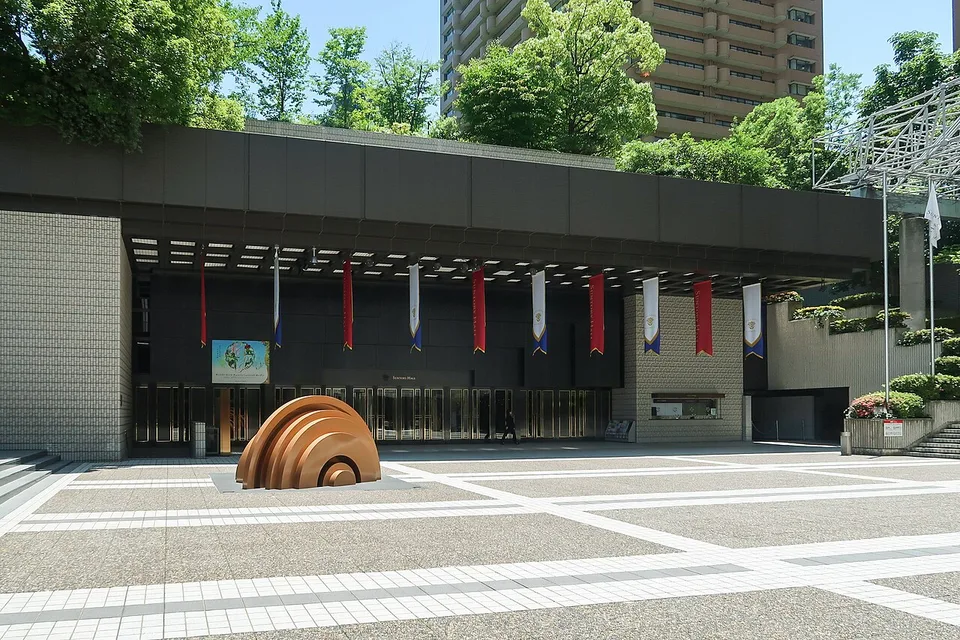
Nov 23, 2026


January 2027
Jan 19 – Mar 14, 2027

February 2027

Feb 13 – Feb 14, 2027
March 2027
Mar 7, 2027

April 2027
Apr 20 – Jun 13, 2027

Day trips from Tokyo
Tokyo’s excursions range from historic streets close to the city to mountain shrines and volcanic scenery farther afield. Kawagoe and Yokohama suit shorter outings; Nikko takes a full day, while Hakone’s loop is best enjoyed at a slower pace.
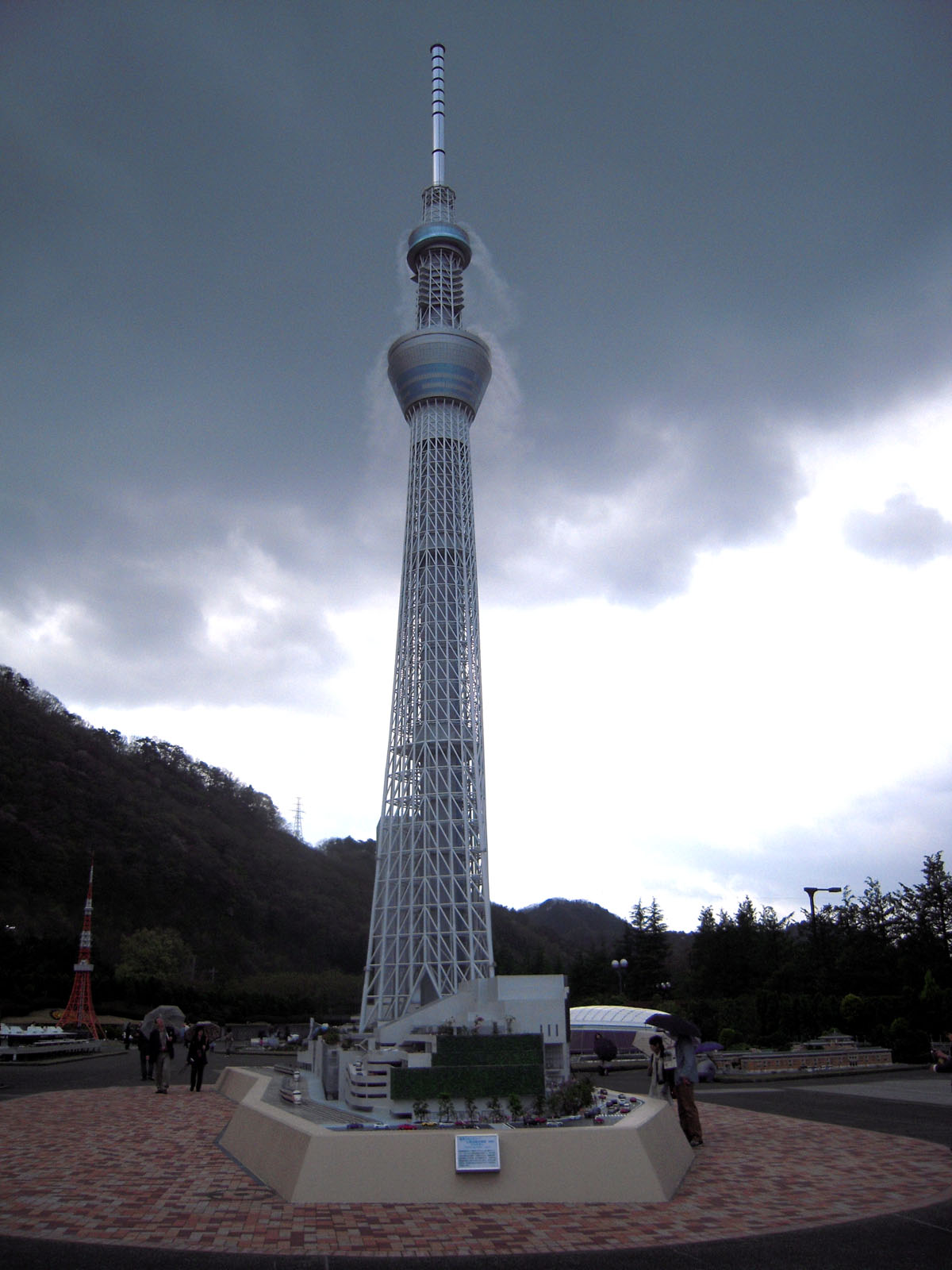
Nikko
Tobu limited express · Full day · Shrines · Forest · Waterfalls
Nikko’s shrine quarter is a day among cedar trees and richly carved buildings, centred on Toshogu Shrine and the red Shinkyo Bridge. The Tobu limited express from Asakusa takes about 1 hour 47 minutes; Toshogu’s adult admission is ¥1,600. Allow a full day for the shrine area. This suits travellers drawn to religious architecture and forest walks; a night in Nikko makes the visit less rushed.

Hakone
Odakyu Romancecar · Overnight preferred · Hot springs · Volcano · Lake · Mount Fuji views
Hakone is a circuit through volcanic country: a mountain railway to Gora, cable car and ropeway over Owakudani’s sulphur vents, then a boat across Lake Ashi and a bus back. The loop takes six to seven hours with stops, and Mount Fuji is visible only on clear days; summer haze often obscures it. The two-day Hakone Free Pass from Shinjuku costs ¥7,100, with the Romancecar surcharge extra. The full circuit is a long day, while a night in a ryokan makes room for the hot springs and a slower visit. The Owakudani ropeway can close in high winds or during volcanic activity.

Kawagoe
Tobu Tojo Line · Half day · Historic streets · Sweets
Kawagoe’s Ichibangai is a walk through a streetscape of merchant storehouses rebuilt in fire-resistant clay after the town burned in 1893. Shops and traditional sweets make this a relaxed half-day of browsing and snacking rather than a grand landscape excursion. The Tobu Tojo Line from Ikebukuro takes about 30 minutes. It suits visitors short on time who want historic streets without a long journey.

Yokohama
Tokyu Toyoko Line · Half day · Harbor · Chinatown · Museums
Yokohama makes an easy change of scene, with a harbour and modern waterfront alongside Chinatown, Japan’s largest. It is about 30 minutes from Shibuya on the Tokyu Toyoko Line. A waterfront walk, a meal in Chinatown or a museum visit fits a half-day; this is a good choice when time is short or the weather makes a longer excursion less appealing.
- Outbound route
- Distance only: 115 km
- Return route
- Distance only: 115 km
- Outbound route
- Distance only: 75 km
- Return route
- Distance only: 75 km
- Outbound route
- Distance only: 34 km
- Return route
- Distance only: 34 km
- Outbound route
- Distance only: 27 km
- Return route
- Distance only: 27 km

Sources (6)
- Day trips from Tokyo by train and bus | Tour in Japan
- Best Day Trips From Tokyo (2026): 12 Easy Trips by Train With Times, Fares & Passes | Self Guide Japan
- Day Trips From Tokyo by Train: 7 Best (2026 Fares)
- Best Day Trips from Tokyo: Where to Go and How to Get There | Day Trip Japan
- Best Day Trips from Tokyo: Kamakura, Hakone, Nikko or Fuji? — Wander Japan
- Day Trips from Tokyo: 6 Best Escapes | SHINOGI DMC
Before you go
These are the advisories for Japan; anything that differs here is marked below.
Visa exemption depends on passport
Visa exemption depends on nationality and passport type. The current MOFA list covers 74 countries and regions for short-term stays. Landing periods are 15 days for Indonesia and Thailand, 30 days for Brunei and Qatar, and 90 days for others. Some nationalities need an ICAO-compliant ePassport to qualify. Taiwan exemption requires a passport with a personal ID number, and Hong Kong and Macao exemptions apply only to SAR passports (BNO passports for Hong Kong residents). Visa-exempt visitors may stay 90 days or less for tourism without income-earning activities.
Check the Ministry of Foreign Affairs of Japan visa-exemption list (mofa.go.jp, short-term stay visa exemption) for your own passport. The list is the authority for each passport's terms; this summary does not make eligibility decisions.
Visa application and eVISA
Visitors who need a visa may be able to apply for a Japan eVISA for a single-entry tourist visit of less than 90 days. Applications can be submitted up to 3 months before arrival, but not less than 2 weeks before arrival. Multiple-entry visas, travel by ship (except certain Busan and Shanghai ferries) and applicants with a previous Japan visa refusal are not eligible for the eVISA. Visas are generally single-entry and valid for 3 months from issue. Eligibility depends on nationality and should be checked with the Ministry of Foreign Affairs and the relevant Japanese mission.
Visa requirements and eVISA eligibility differ by nationality. Check the Ministry of Foreign Affairs of Japan (mofa.go.jp) for your passport's terms.
Passport validity
A passport valid for the whole stay is generally sufficient. If a temporary travel document for emergency use is held, it must be valid for 6 months from the visa application date.
Tokyo: practical questions for your trip
Tokyo’s seasons shape its blossoms, foliage and outdoor conditions; airport rail links, day-trip routes and timed attractions affect how to get around and what to book.
Sources (17)
- Book in Advance: teamLab, Ghibli & Shibuya Sky — tokyo.how
- Top tourist attractions in Tokyo: the best sightseeing spots | The Official Tokyo Travel Guide, GO TOKYO
- Japan Attraction Ticket Prices 2026: Disney, teamLab & More
- Japan Trip Cost in 2026 | JGO!
- Tokyo Neighborhoods Guide: Best Districts to Visit (2026)
- Day trips from Tokyo by train and bus | Tour in Japan
- Seasons and Climate | National Parks of Japan
- Tokyo Local Food | The Official Tokyo Travel Guide, GO TOKYO
- Tokyo in 7 days: the classic neighborhoods plus day trips to Kamakura and Hakone, a one-week itinerary | TOKYO MAPPED
- Tokyo Itinerary Plan For The Best Vacation in 5 Days | The Official Tokyo Travel Guide, GO TOKYO
- CALENDAR | The Official Tokyo Travel Guide, GO TOKYO
- Day Trips from Tokyo: 6 Best Escapes | SHINOGI DMC
- Getting to Tokyo - Travel to Tokyo | The Official Tokyo Travel Guide, GO TOKYO
- Tokyo | Kanto | Destinations | Travel Japan - Japan National Tourism Organization (Official Site)
- Tokyo Food Guide – Food in Japan
- How to travel by train and bus in Japan | Guide | Travel Japan (Japan National Tourism Organization)
- Where to Stay in Tokyo (2026): Neighbourhoods Compared
Explore Tokyo and nearby areas
Showing 71 of 71
- DistrictMinato12,131 places
- DistrictShinjuku11,038 places
- DistrictShibuya10,020 places
- DistrictChuo8,959 places
- DistrictChiyoda7,864 places
- DistrictSetagaya7,180 places
- DistrictTaito7,000 places
- DistrictToshima5,706 places
- DistrictOta5,093 places
- DistrictSuginami4,583 places
- DistrictKoto4,495 places
- DistrictShinagawa4,352 places
- DistrictMeguro3,589 places
- DistrictSumida3,565 places
- DistrictAdachi3,524 places
- DistrictEdogawa3,130 places
- DistrictNerima3,043 places
- DistrictNakano2,882 places
- DistrictItabashi2,880 places
- DistrictHachioji2,878 places
- DistrictKatsushika2,858 places
- DistrictBunkyo2,715 places
- DistrictKita2,653 places
- DistrictMusashino2,252 places
- DistrictMachida2,114 places
- DistrictTachikawa1,708 places
- DistrictArakawa1,622 places
- DistrictChofu1,434 places
- DistrictFuchu1,335 places
- DistrictNishitokyo916 places
- DistrictKokubunji850 places
- DistrictMitaka819 places
- DistrictKodaira785 places
- DistrictTama777 places
- DistrictOme707 places
- DistrictKoganei691 places
- DistrictHigashimurayama657 places
- DistrictHino593 places
- DistrictAkishima586 places
- DistrictKunitachi522 places
- DistrictOkutama501 places
- DistrictHigashikurume482 places
- DistrictFussa478 places
- DistrictAkiruno415 places
- DistrictHamura397 places
- DistrictKomae377 places
- DistrictHigashiyamato373 places
- DistrictInagi348 places
- DistrictMusashimurayama333 places
- DistrictKiyose324 places
- LocalityOshima220 places
- DistrictOshima213 places
- DistrictHachijo195 places
- LocalityHachijō195 places
- DistrictMizuho183 places
- DistrictOgasawara140 places
- LocalityOgasawara122 places
- LocalityNiijima118 places
- DistrictNiijima114 places
- DistrictHinode114 places
- LocalityKozushima73 places
- DistrictKozushima71 places
- DistrictHinohara63 places
- LocalityMiyake63 places
- DistrictMiyake60 places
- DistrictAogashima13 places
- LocalityAogashima13 places
- DistrictToshima12 places
- LocalityToshima12 places
- DistrictMikurajima11 places
- LocalityMikurajima11 places